Study with Active Recall
You reread the chapter three times, it all looks familiar, and the exam still blanks you. Rereading builds recognition — the feeling of I-have-seen-this — while tests demand recall: producing the answer from nothing. Active recall flips the process: you close the book and force the answer out, and that effort is what wires it into memory.

TL;DR / Quick Fix
Quick fix: after reading a section, close the book and write down everything you remember — no peeking. Check what you missed, then repeat. Flashcards work the same way: answer before you flip. It feels harder than rereading because it is working.
Follow these steps
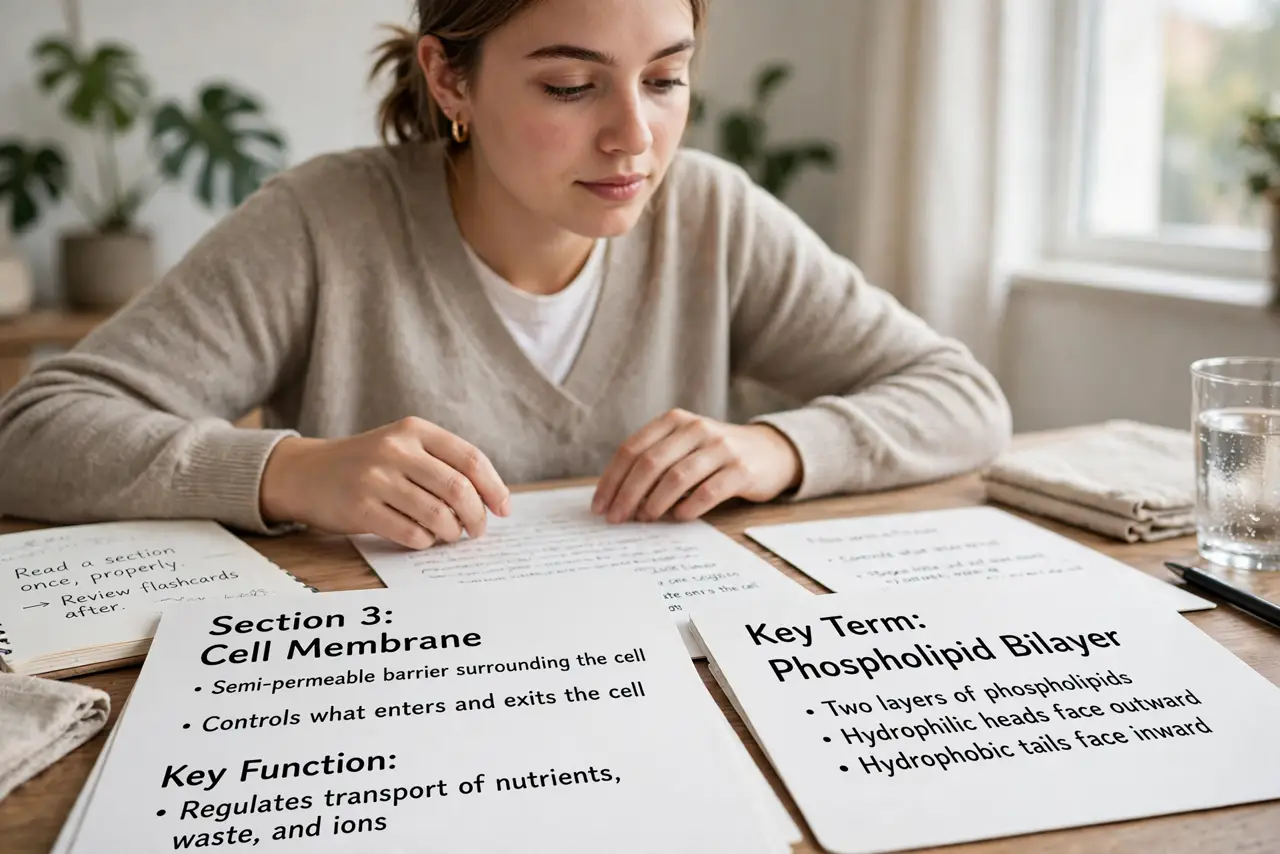
- Read a section once, properly. Read to understand, not to memorize — one careful pass. Recall practice does the memorizing; the reading just loads the material.
- Close the book and write. Without looking, write or say everything you remember: key terms, steps, relationships. The blank page is the point — struggling to produce the answer builds the memory.
- Check and patch the gaps. Open the book and compare. The things you missed or mangled are your actual weak spots — reread only those, not the whole chapter.
- Use flashcards the right way. Read the prompt, say the answer out loud, then flip. If you flipped first and nodded along, you practiced recognition — the fluency trap all over again.
- Space the recalls out. Recall today, again in three days, again next week. Each successful recall at the edge of forgetting strengthens the memory far more than five recalls in one sitting — that is spaced repetition.
- Explain it simply. After recalling, explain the concept as if to a beginner. If you cannot put it in plain words, you have memorized the shape of it, not the meaning — teaching it exposes that instantly.
What NOT to do
- Do not peek mid-recall. Every peek converts the exercise back into rereading — the struggle is the workout.
- Do not recall only what you already know. Easy cards feel good and teach nothing; weight your practice toward the ones you miss.
- Do not cram all recalls into one night. Massed recall the night before fades within days — spacing is non-negotiable.
- Do not confuse highlighting with studying. A colorful page is a decorated page, not a learned one.
Frequently asked questions
Why does recall feel so much harder?
Because it is actual work — your brain is building retrieval paths instead of coasting on recognition. Harder now, easier on test day.
How many times should I recall something?
Until you can produce it cold, then keep it on a spaced schedule. Three to five successful spaced recalls usually lock in a fact.
Does this work for skills, not just facts?
Yes — close the tutorial and rebuild the thing from memory. Recalling procedures works the same way as recalling definitions.