Wake Up with a Sunrise Alarm
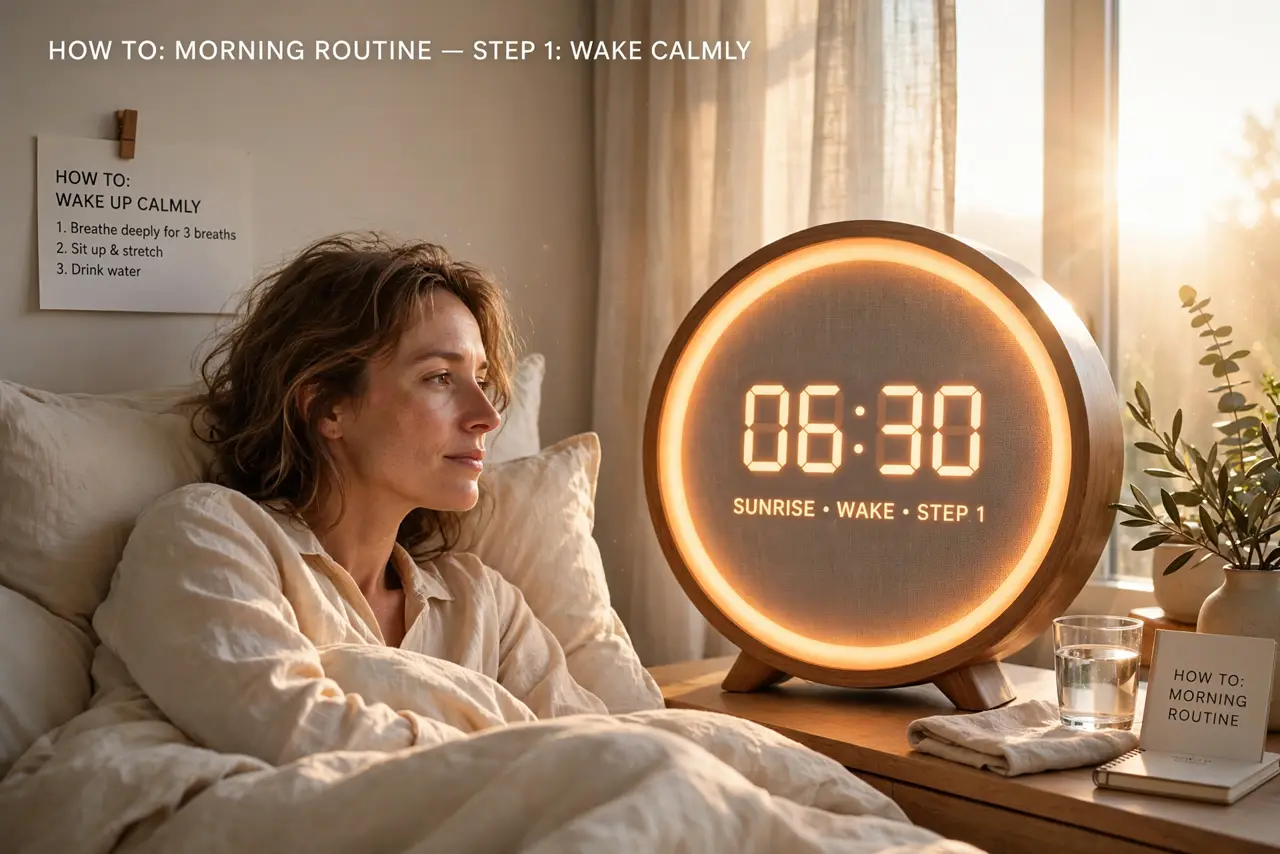
A blaring alarm yanks you out of deep sleep and the whole morning feels wrong. A sunrise alarm clock gradually brightens the room over 20–30 minutes, easing you awake the way actual dawn does. It sounds like a luxury until you try it for a week.
TL;DR / Quick Fix
Quick fix: a sunrise alarm clock brightens gradually for 20–30 minutes before your wake time, pulling you out of deep sleep gently. Set the light to start before your alarm sound as backup. It works best in a dark bedroom.
Follow these steps
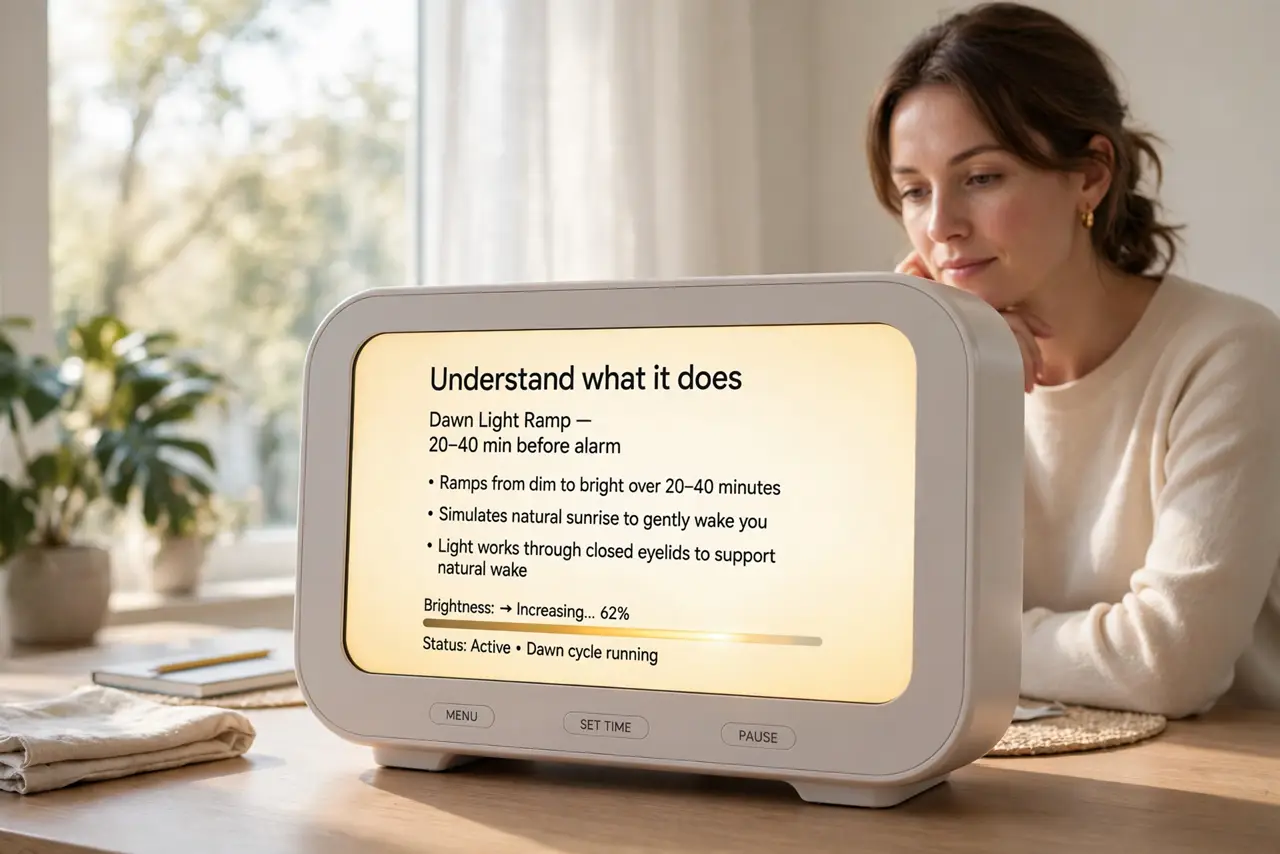
- Understand what it does. The clock ramps its light from dim to bright over 20–40 minutes before your set time, simulating dawn. Your body responds to light even through closed eyelids.
- Place it on the nightstand. It needs to actually light your face — across the room on a dresser will not cut it. Nightstand, aimed at the bed.
- Set the sunrise duration. Start with 30 minutes. Longer ramps suit deep sleepers; shorter ones suit light sleepers. Adjust after a week.
- Keep an audio backup. Set the gentle alarm sound for your actual wake time. The light wakes most people; the sound catches the rest.
- Darken the bedroom. Blackout curtains or an eye mask at night make the morning light contrast stronger — the effect depends on the difference.
- Give it a full week. The first two mornings may feel odd. Most people convert around day five when the grogginess gap becomes obvious.
What NOT to do
- Do not expect it to replace the alarm sound. Keep audio as backup — oversleeping once kills trust in the method.
- Do not place it across the room. Light on your face is the mechanism; distance dilutes it.
- Do not judge it on night one. Your body needs several days to sync to the new cue.
- Do not use it with the room already bright. Daylight leaking in all night ruins the contrast the clock needs.
Frequently asked questions
Do sunrise alarms really work?
For many people, yes — gradual light eases the transition out of deep sleep. It is not magic, but mornings feel noticeably less brutal.
What if I sleep through the light?
Deep sleepers sometimes do. That is what the backup sound is for — and try a longer, brighter ramp.
Are they better than phone alarms?
Different job: the phone is a hammer, the sunrise clock is a nudge. Most converts keep both, light first.