Surge Protector vs Power Strip: The Difference
A power strip and a surge protector look almost identical, but only one of them guards your gear against voltage spikes. Knowing the difference decides whether your computer survives the next storm or just has more outlets.
TL;DR / Quick Fix
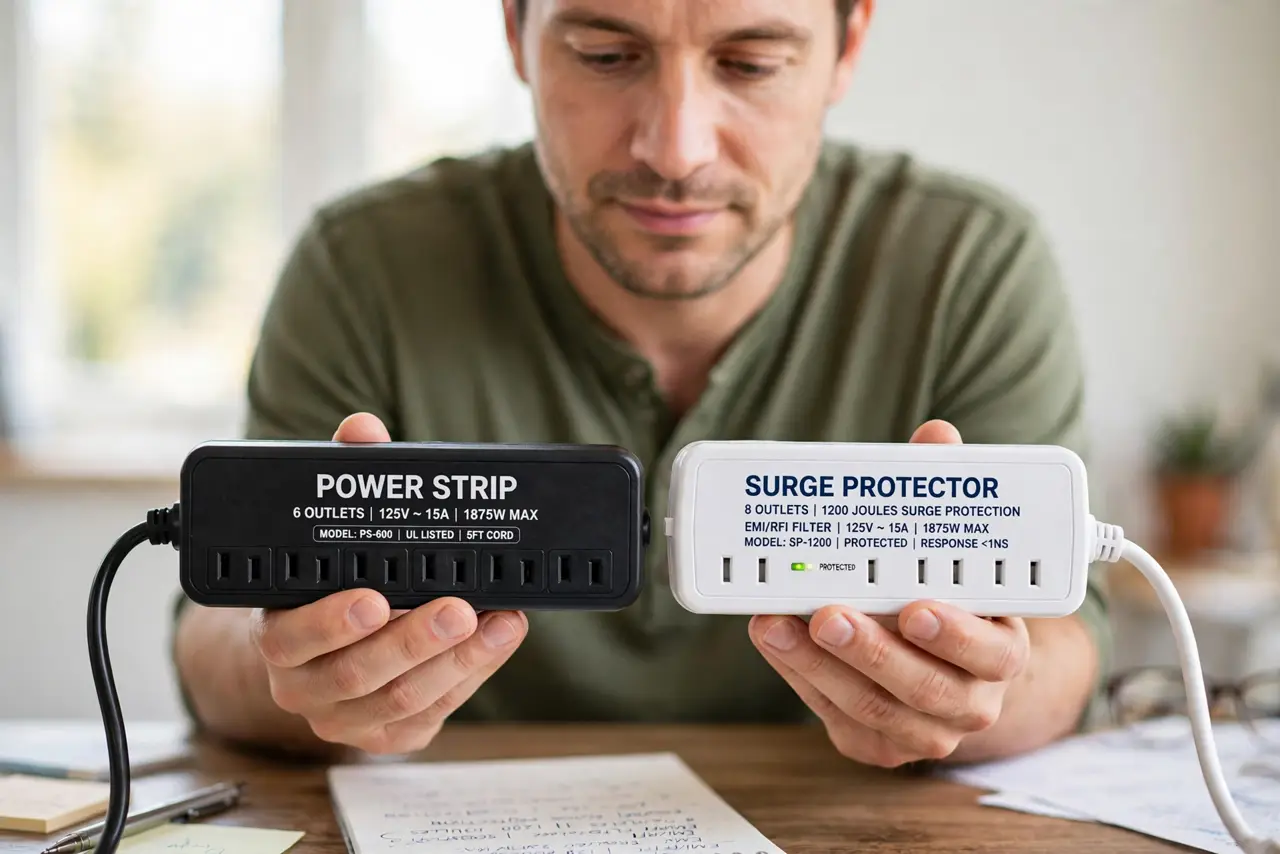
Quick fix: check the box or the label for a joule rating — that number means it is a real surge protector. A plain power strip only adds outlets. For computers and TVs, use a surge protector with a high joule rating and replace it after a big surge.
Follow these steps
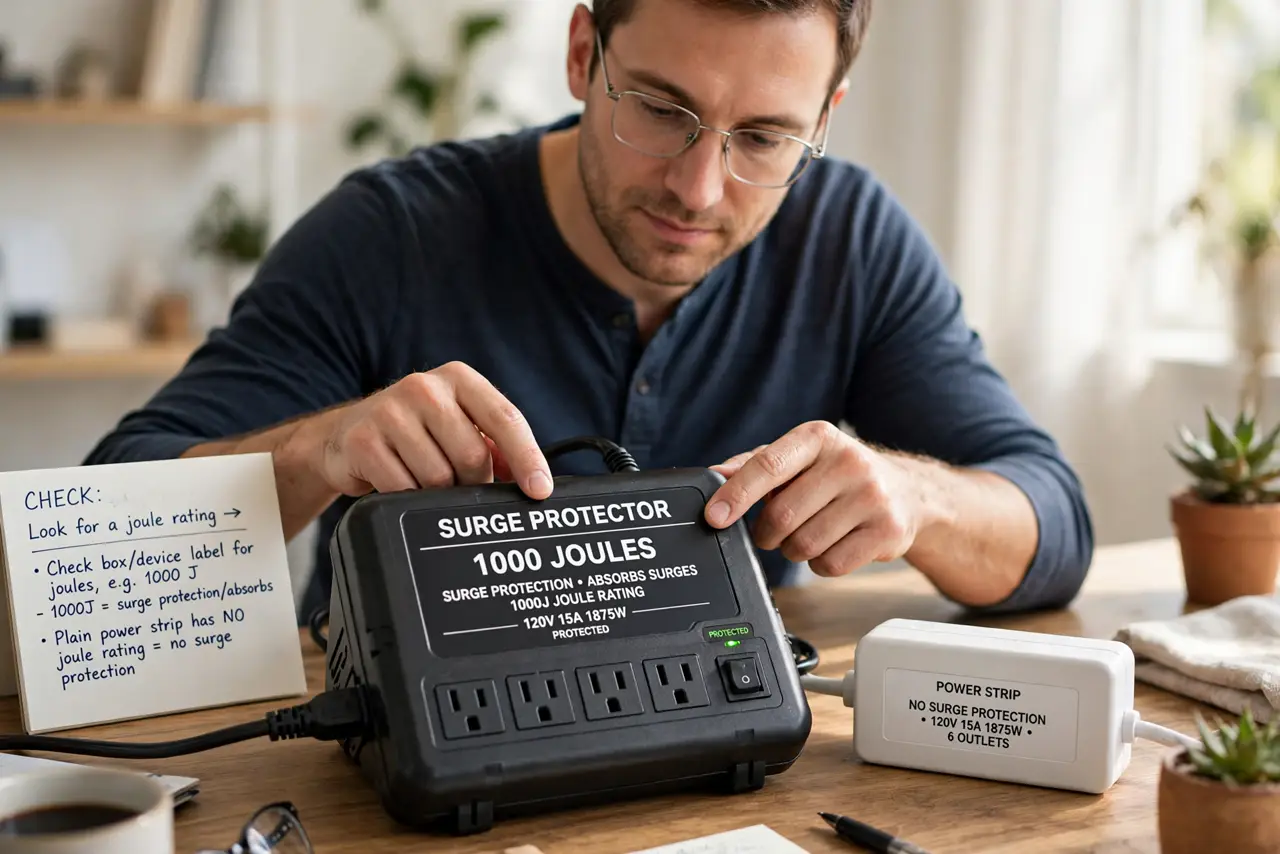
- Look for a joule rating. Check the box or the device label for a joule rating, such as 1000 joules. A joule rating means the device absorbs surges, and a plain power strip has no such number.
- Understand what a power strip does. A power strip only gives you more outlets from one wall socket. It passes power straight through, spikes and all, so it protects nothing on its own.
- Understand what a surge protector adds. A surge protector adds components that absorb or divert voltage spikes. That protection is what stands between a lightning surge and your computer's power supply.
- Match the protector to the gear. Plug computers, monitors, and TVs into the surge protector. Phone chargers and lamps can use the plain strip, since they are cheaper to replace.
- Check whether you need a UPS too. A surge protector guards against spikes, not blackouts — for blackouts you need a UPS, which adds battery backup a surge protector cannot give.
- Replace it after a major surge. Surge protection wears out absorbing spikes. After a big storm or a tripped protector, replace the unit, since a worn protector looks fine while protecting nothing.
What NOT to do
- Do not daisy-chain power strips. Plugging one strip into another overloads the first outlet and is a fire risk, so use one strip per wall outlet.
- Do not assume a strip with a switch is a surge protector. The switch only turns outlets off; protection comes from the joule rating, not the switch.
- Do not plug a surge protector into another surge protector. They can interfere with each other, so one good unit per outlet is the right setup.
- Do not keep a surge protector forever. Its protection fades with each absorbed spike, so replace it every few years or after a known big surge.
Frequently asked questions
Is a power strip the same as a surge protector?
No. A power strip only adds outlets, while a surge protector adds spike protection measured in joules.
What joule rating should I buy?
Higher is better for valuable gear. Look for a clearly printed joule rating, and treat anything without one as a plain strip.
Does a surge protector stop blackouts?
No. It only handles spikes. For blackouts you need a UPS, which keeps devices running on battery.