Spot Ticket Scams
Sold-out shows breed scammers: fake resale listings, too-good prices in your DMs, and 'transfer apps' that are really payment traps. Concert and sports tickets are one of the most faked purchases online. Learn the patterns behind fake ticket scams before you pay.
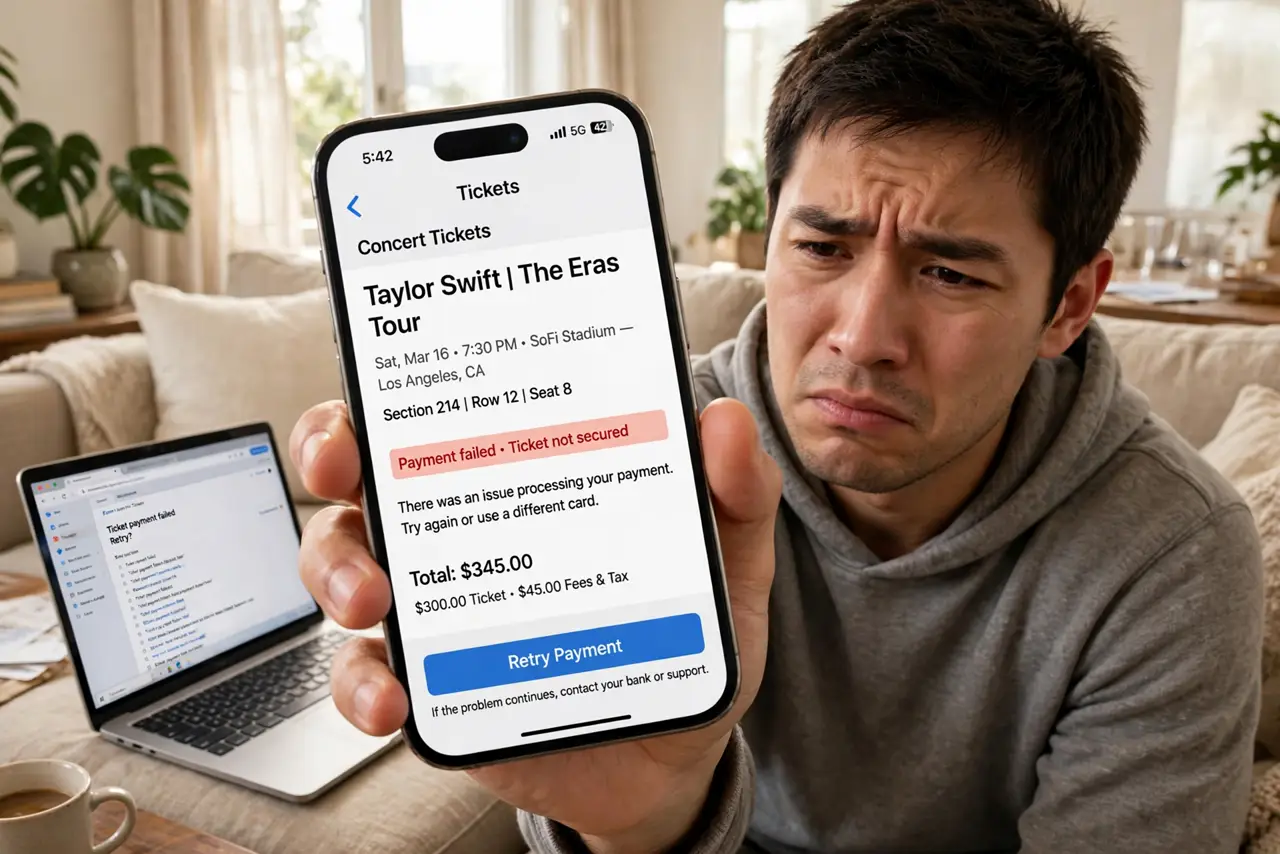
TL;DR / Quick Fix
Quick fix: buy tickets only from the venue's official seller or a well-known resale platform with buyer protection — never from a stranger in your DMs. Screenshot barcodes mean nothing; scammers reuse them. If the price is far below face value for a sold-out show, walk away.
Follow these steps
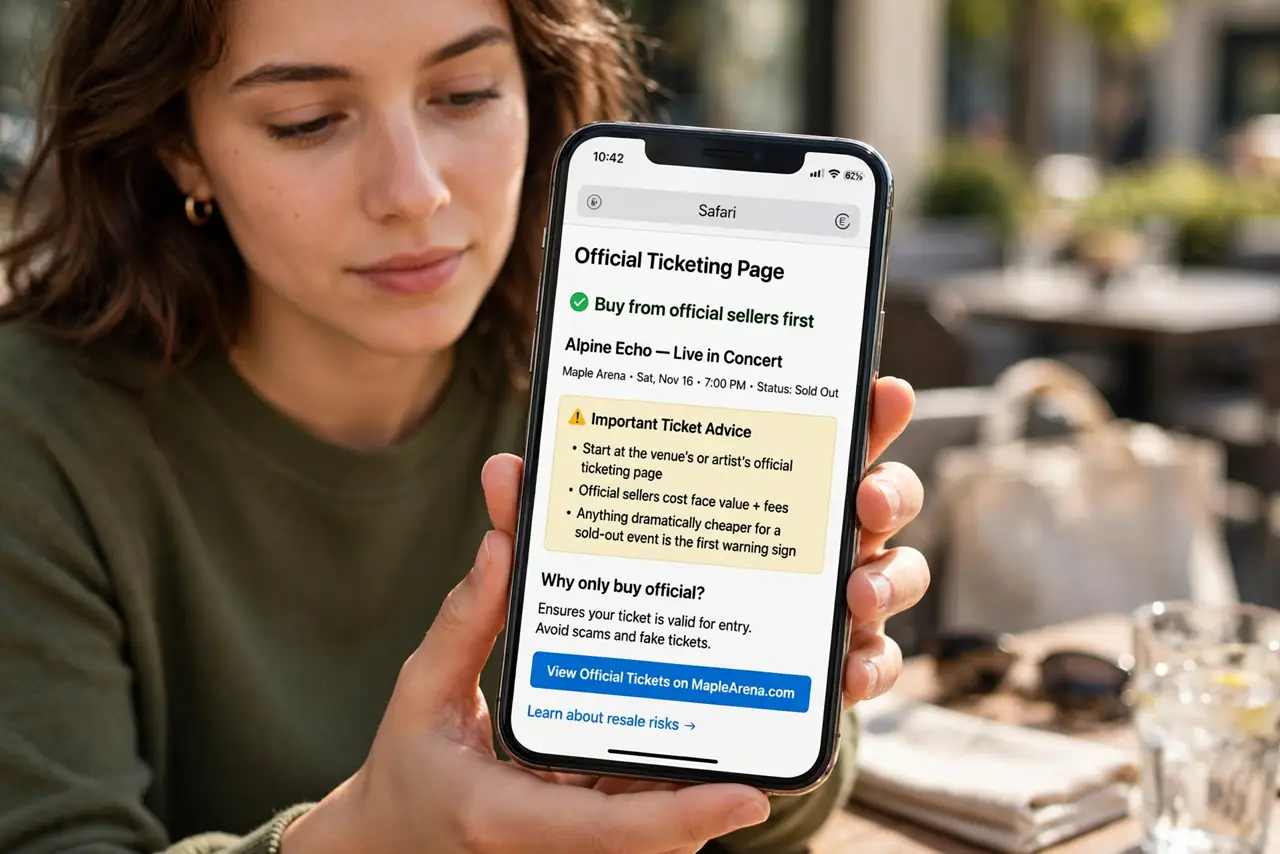
- Buy from official sellers first. Start at the venue's or artist's official ticketing page. Official sellers cost face value plus fees — anything dramatically cheaper for a sold-out event is the first warning sign.
- Use resale platforms with guarantees. If the show is sold out, use well-known resale marketplaces that verify tickets and guarantee refunds. A stranger's DM has no guarantee, no matter how convincing the story.
- Never pay with gift cards or wire transfers. Legitimate sellers take cards through protected checkout. Any request for gift cards, crypto, or wire transfers is proof of a scam — the same rule as every other scam.
- Do not trust screenshots of barcodes. A barcode screenshot can be sold to fifty people or faked entirely. Real transfers happen inside the ticketing app, where ownership actually changes hands.
- Meet in safe ways for local deals. If you must buy locally, meet in a public place and transfer the ticket in the official app before paying. Never pay first and 'receive the transfer later'.
- Verify before the event, not at the door. Add the ticket to your wallet app or confirm it in the ticketing app days ahead. Discovering a fake at the entrance, with the show starting, is the worst possible moment.
What NOT to do
- Do not buy from social media comments or DMs, even if the profile looks like a real fan.
- Do not let 'only two left' pressure override your checks. Scarcity is the scammer's favorite tool.
- Do not click ticket links in unsolicited emails — type the marketplace address yourself.
- Do not pay extra for 'VIP upgrades' from unofficial sellers. Upsells are a classic add-on scam.
Frequently asked questions
The seller sent a photo of their ID. Is that enough?
No — IDs are easy to fake or steal. Identity photos prove nothing about ticket ownership; only an in-app transfer does.
What if I already paid a scammer?
Contact your bank or card issuer immediately about reversing the payment, save every message as evidence, and report the listing and account to the platform.
Are ticket resale sites always safe?
The established ones with buyer guarantees are far safer than strangers, but always buy within the platform — moving the deal to cash or a side app voids the protection.