Spot Vishing Calls
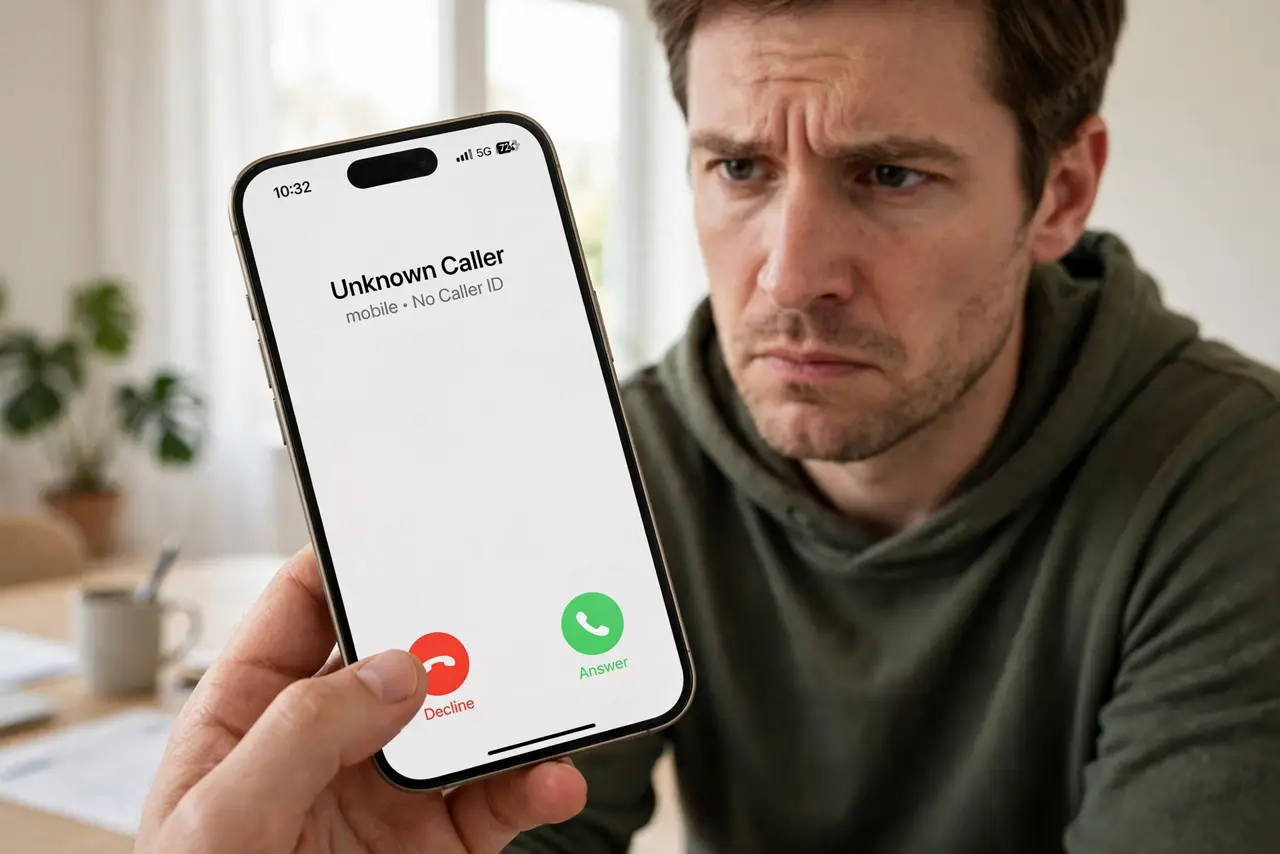
The caller says they are from your bank, there is suspicious activity, and they need to verify you — right now, on this call. That urgency is the weapon. Vishing is phishing by voice call, and the callers are professionals with scripts, spoofed numbers, and your personal details. One habit defeats all of it: hang up and call back.
TL;DR / Quick Fix
Quick fix: treat unexpected calls about your bank, accounts, or prizes as scams until proven otherwise — hang up and call the company back on its official number. Never share codes, passwords, or remote access with a caller. Real banks never ask for your password or one-time codes by phone.
Follow these steps
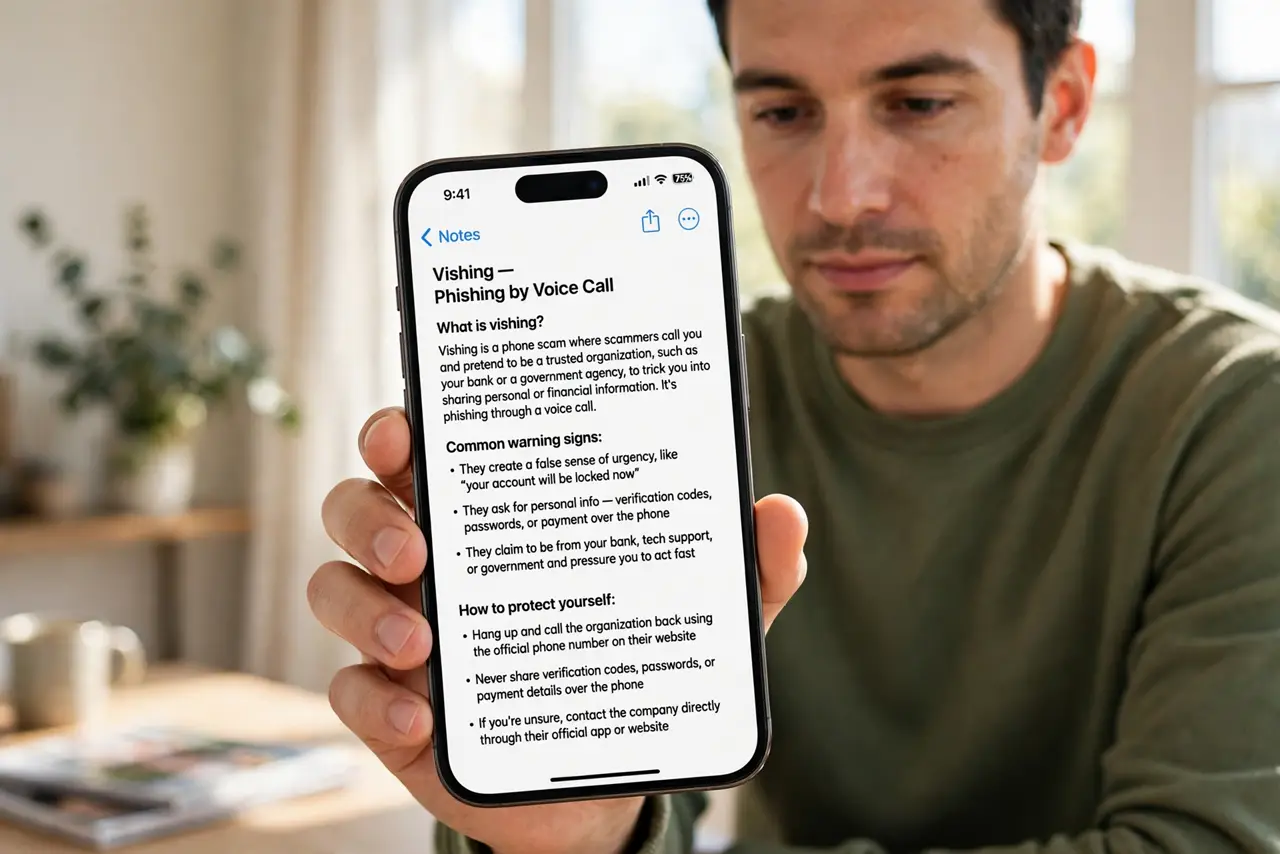
- Know what vishing is. Vishing is phishing done by voice call. Attackers spoof caller ID to show your bank's name and follow scripts designed to panic you — the vishing playbook is more rehearsed than you expect.
- Hang up on pressure. Urgency is the tell: act now or your account closes. Real banks do not operate this way. Hang up calmly — a legitimate matter will still exist when you call back.
- Call back on the official number. Look up the company's real number yourself — from their site, app, or your card — and call it. If the issue was real, they will confirm it. This one step kills nearly every vishing attempt.
- Never share codes or passwords. No real bank asks for your full password, PIN, or one-time code over the phone. Anyone who does is, by definition, not your bank.
- Never grant remote access. Callers asking you to install remote-access software are setting up theft, not support. Real support never cold-calls to offer it.
- Silence the unknown. Enable silence unknown callers so strangers go straight to voicemail. Scammers rarely leave messages; real callers do.
What NOT to do
- Do not stay on the line to argue. Every minute you talk gives them more chances to hook you — hang up.
- Do not trust the caller ID display. Spoofing a bank's name and number takes seconds and costs nothing.
- Do not call back the number they give you. It routes to the scammers. Always look up the number independently.
- Do not assume an accent or bad grammar means scam — or that perfect English means legitimate. Judge by the process, not the voice.
Frequently asked questions
What if I already gave them information?
Call your bank immediately on its official number, change the exposed passwords, and turn on authenticator codes. Speed matters — the first hour is when damage happens.
Can scammers really fake my bank's number?
Yes, trivially. Caller ID was never designed as security, so treat the displayed name as decoration, not proof.
Should I report vishing calls?
Yes — report to your carrier and your country's fraud reporting service. Reports feed the blocklists that protect everyone else.