Free vs Paid VPN: The Privacy Difference
A VPN costs money to run — servers, bandwidth, staff — so a free one pays its bills somehow. Understanding where a free VPN's money comes from is the key to judging whether it protects your privacy or sells it.
TL;DR / Quick Fix
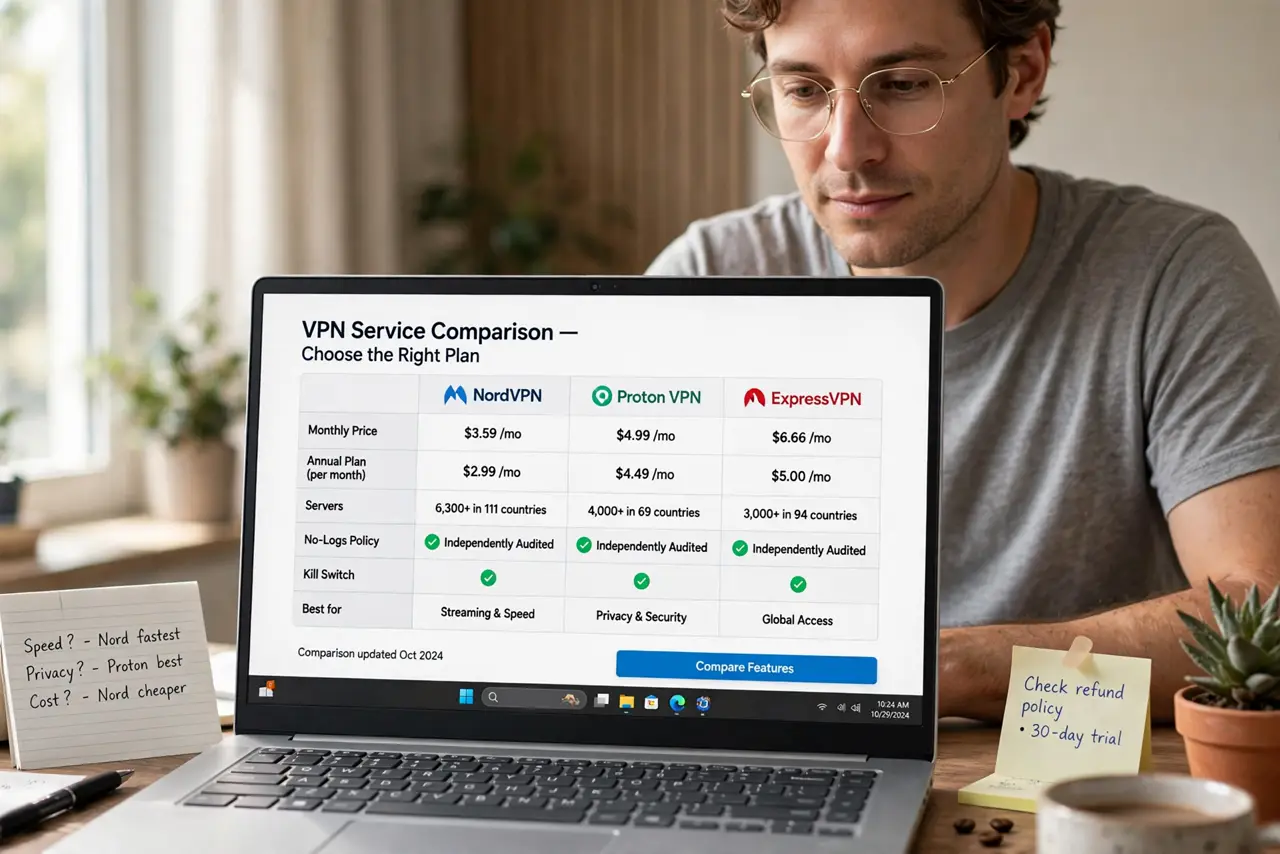
Quick fix: read the free VPN's privacy policy and business model before trusting it, and prefer a paid service with a clear no-logs policy and independent audit. Then enable its kill switch, use it on public Wi-Fi, and skip free VPNs that sell data or inject ads.
Follow these steps
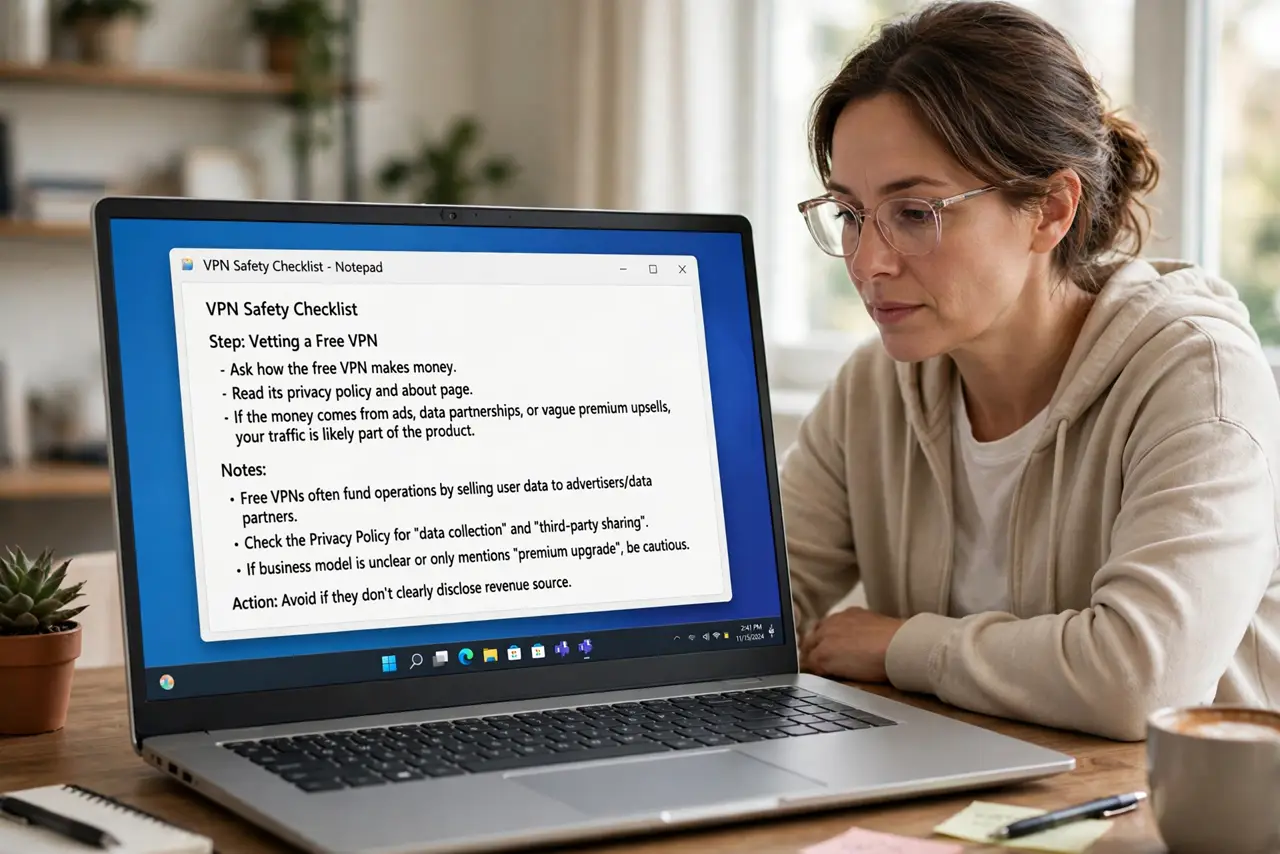
- Ask how the free VPN makes money. Read its privacy policy and about page. If the money comes from ads, data partnerships, or vague premium upsells, your traffic is likely part of the product.
- Look for a no-logs policy and an audit. Prefer services that publish a clear no-logs policy backed by an independent audit. A policy without verification is a promise; an audited one is evidence.
- Check the company behind the app. Look up who owns the VPN and where it is based. Obscure owners and rushed app-store listings are warning signs, while established companies have reputations to lose.
- Enable the kill switch on any VPN you use. Turn on the kill switch so a dropped connection does not silently expose your traffic. Free or paid, a VPN without a kill switch leaks at the worst moment.
- Use it where it matters most. Run the VPN on public Wi-Fi and other untrusted networks. A trustworthy VPN on risky networks beats a shady free one everywhere.
- Skip free VPNs that inject ads or sell data. If reviews or the policy mention injected ads or data sharing, delete the app. A VPN that monetizes your traffic is worse than no VPN for privacy.
What NOT to do
- Do not assume free means generous. Running VPN servers costs real money, so a free service without a clear business model should raise questions.
- Do not trust a no-logs claim without evidence. Marketing pages all claim no logs; independent audits are what separate claims from facts.
- Do not use a VPN to break laws or dodge every rule. A VPN is a privacy tool, not a license, and it does not make you anonymous.
- Do not keep two VPNs running at once. They conflict and slow everything down, so pick one trustworthy service and use it properly.
Frequently asked questions
Are free VPNs always bad?
Not always, but the good ones are limited free tiers of paid services with clear business models, not unlimited free apps with mystery funding.
What matters more than price?
The logging policy, independent audits, the owning company, and a working kill switch matter more than the price tag.
Does a VPN make me anonymous?
No. It hides your traffic from the local network and your IP from sites, but logins and browser fingerprinting still identify you.