Whole-Home Surge Protection
A nearby lightning strike can send thousands of volts through your home's wiring, frying everything plugged in at once — TVs, PCs, appliances, the works. Plug-in strips help, but whole-home surge protection at the breaker panel guards every circuit in the house. Here is what it is and whether you need it.
TL;DR / Quick Fix
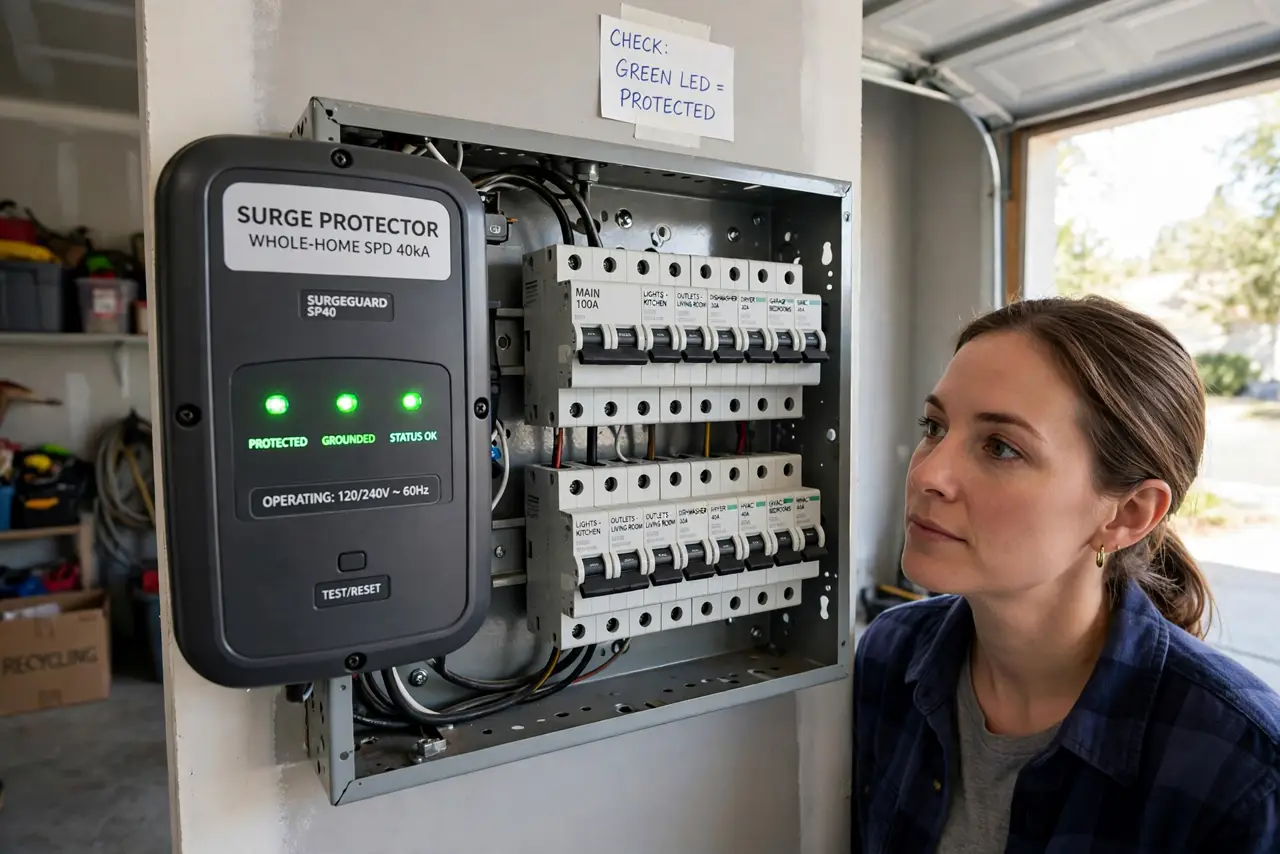
Quick fix: a whole-home surge protector installs at your breaker panel and clamps big surges before they reach outlets. It costs a few hundred installed and protects every circuit. Pair it with point-of-use strips for layered defense. An electrician should install it.
Follow these steps
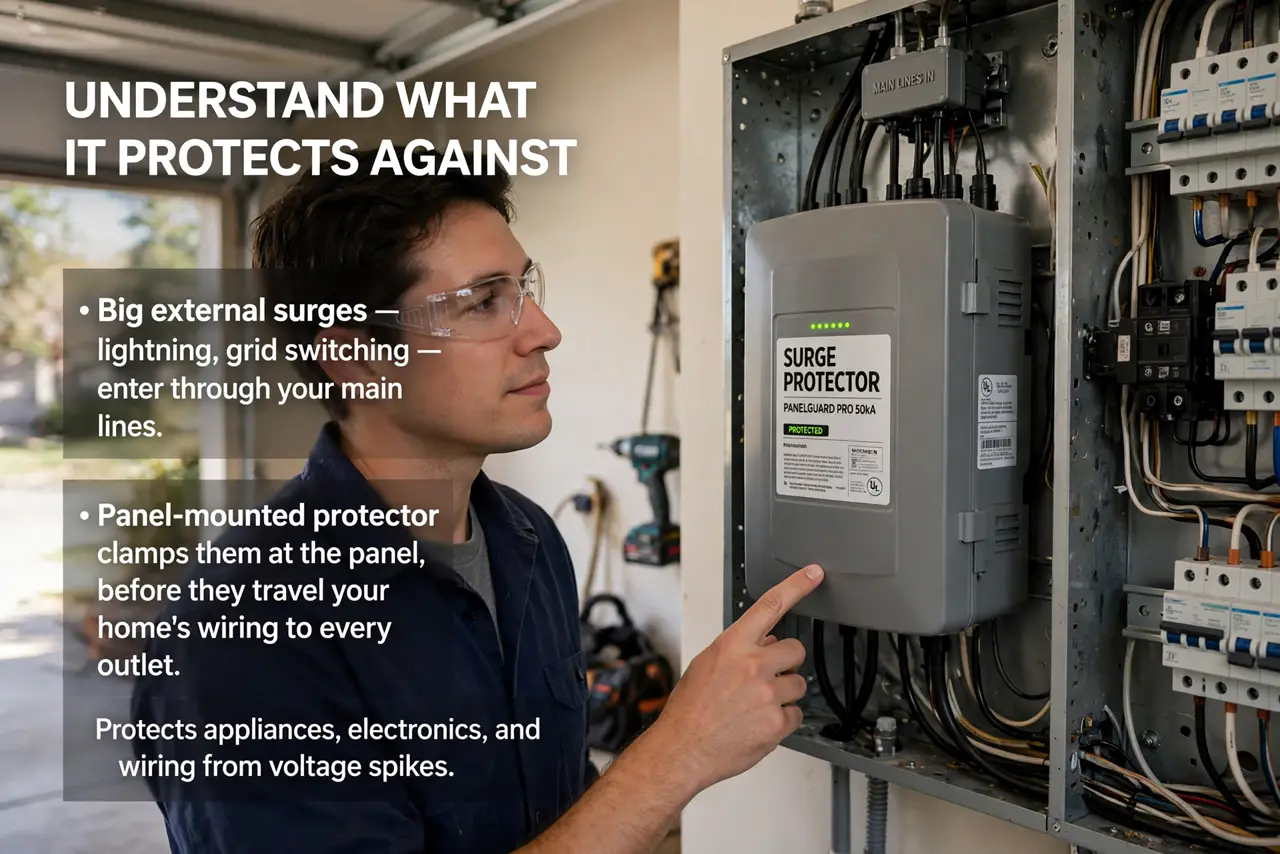
- Understand what it protects against. Big external surges — lightning, grid switching — enter through your main lines. A panel-mounted protector clamps them there, before they travel your home's wiring to every outlet.
- Know what it does not do. It handles large spikes, not the small daily fluctuations or a direct lightning strike. Layer it with plug-in protectors at valuable gear — the two levels catch different threats.
- Get an electrician to install it. This mounts inside or beside your breaker panel and wires into mains power. It is not a DIY project — a licensed electrician installs most units in under an hour.
- Check the specs that matter. Look for high surge current ratings (tens of thousands of amps) and a clear status indicator. Type 1 units mount before the panel; Type 2 mount in it — your electrician will recommend.
- Maintain it like any protector. Surge components wear with each hit. Check the indicator light yearly and after big storms — a dead unit protects nothing, same as a dead plug-in strip.
- Consider it if your area storms. Frequent lightning, rural grids, or expensive home electronics make the math easy. One fried HVAC board or home theater costs more than the protector several times over.
What NOT to do
- Do not install it yourself. Breaker panels carry lethal voltage — this is licensed-electrician territory, no exceptions.
- Do not expect it to replace plug-in protectors. Layered protection is the standard — panel unit plus strips at sensitive gear.
- Do not ignore the indicator light. A spent whole-home unit looks identical to a working one — check the status light after storm season.
- Do not assume renters cannot get protection. Ask the landlord — many approve since it protects their property too — or rely on quality plug-in units.
Frequently asked questions
How much does whole-home surge protection cost?
Typically a few hundred dollars installed — the device plus an hour of electrician time. Compare that to one fried appliance and it pays for itself.
Does it protect against direct lightning strikes?
No device fully does — a direct strike carries overwhelming energy. It dramatically reduces damage from nearby strikes and grid surges, which are far more common.
Do I still need plug-in protectors?
Yes. The panel unit tames big spikes; plug-in protectors clean up the smaller residuals at your most valuable gear. Layers, not either-or.