Work in 90-Minute Cycles
By 3 PM your brain feels like wet cement — the morning was productive, the afternoon is a write-off, and coffee just makes you jittery. The problem is rarely laziness; it is that you have been pushing through without real recovery. Working in 90-minute cycles with genuine breaks matches how focus naturally rises and falls, and it rescues the afternoon. This guide shows the rhythm.

TL;DR / Quick Fix
Quick fix: the 90-minute cycle follows your brain's natural focus rhythm — work hard for 90 minutes, then take a real 15 to 20 minute break away from screens. It beats the afternoon crash because the break restores you. Two focused cycles each morning can outproduce a whole distracted day.
Follow these steps
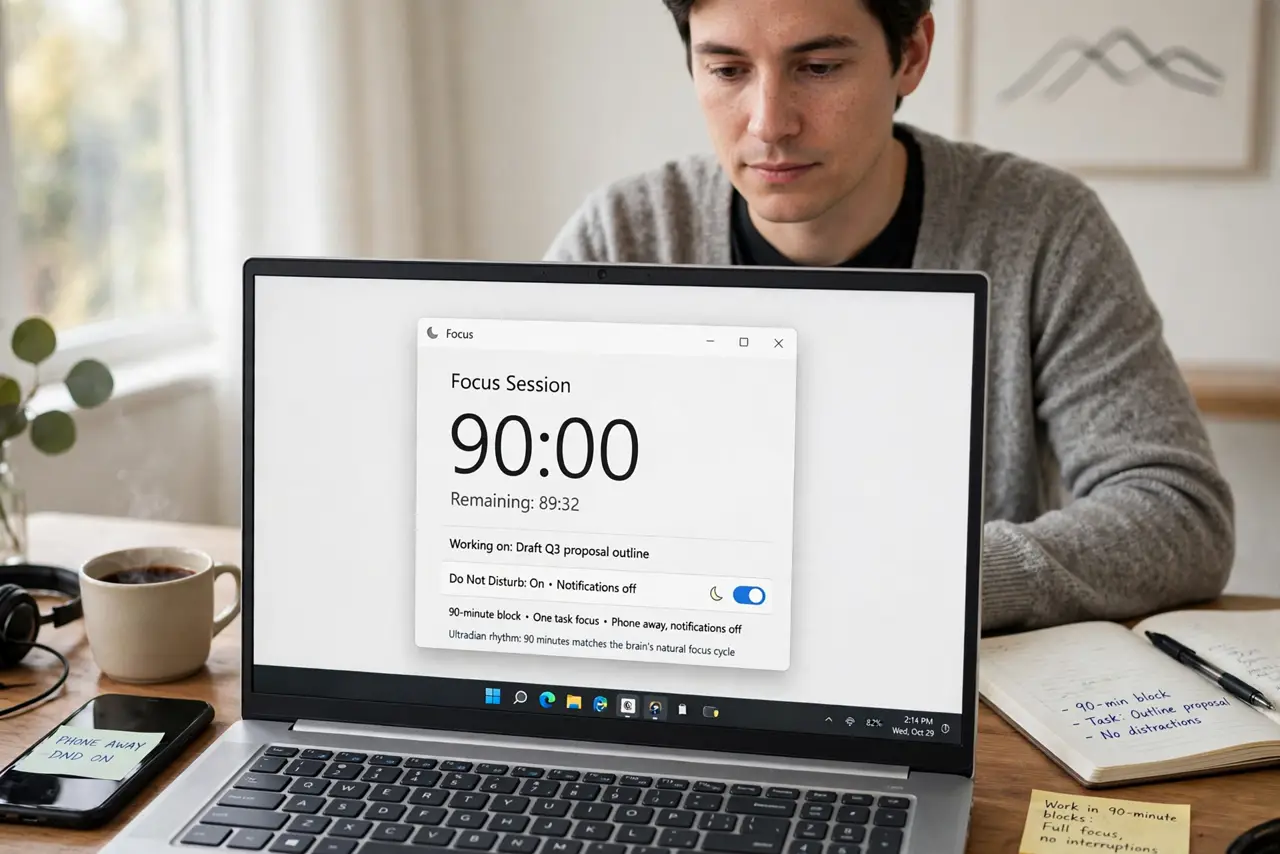
- Work in 90-minute blocks. Set a timer for 90 minutes and work on one thing with full attention — phone away, notifications off. Ninety minutes matches the brain's natural ultradian focus rhythm, long enough to reach depth without forcing it.
- Take a real 15 to 20 minute break. When the timer ends, stop — even mid-sentence. Walk, stretch, get water, look outside. The break must be genuinely restorative: no email, no news, no 'quick checks' that keep the brain switched on.
- Do two cycles before lunch. Two focused 90-minute cycles make a powerful morning — roughly three hours of real deep work, which beats six hours of distracted half-work. Schedule meetings and shallow tasks around these blocks, not inside them.
- Expect one good afternoon cycle. After lunch, most people have one solid 90-minute cycle in them. Plan your hardest remaining task for it and let the rest of the afternoon be lighter work — fighting biology with willpower loses.
- End the day with a shutdown ritual. Write tomorrow's first task, close the tabs, tidy the desk. A clear ending tells your brain the workday is over, which is what makes tomorrow's first cycle start cleanly.
- Track energy, not just hours. For a week, note which cycles felt strong and which dragged. Patterns emerge fast — most people discover their best cycle is earlier than they assumed. Pair this with fewer context switches and the afternoon crash often disappears entirely.
What NOT to do
- Do not work through the break. Skipping recovery feels heroic and produces a useless afternoon — the break is load-bearing, not optional.
- Do not fill breaks with your phone. Scrolling is stimulation, not rest; your brain needs genuinely different input to recover.
- Do not schedule meetings inside a cycle. One interruption shatters the block — guard the 90 minutes like an appointment with yourself.
- Do not attempt four deep cycles daily. Two to three is the realistic human maximum; planning five just trains you to ignore the system.
Frequently asked questions
What if I only have 60 minutes free?
Use the time anyway — a focused 60 beats a distracted 90. The cycle is a rhythm, not a prison; partial blocks still work when protected.
Is the afternoon crash just about food?
Heavy lunches worsen it, but the core cause is accumulated fatigue without recovery. Lighter lunch plus a real break beats either alone.
Can I do 90-minute cycles for shallow work?
You can, but it is overkill — batch shallow tasks into one cycle and save the deep rhythm for work that needs it.