Write Meeting Agendas
Everyone has sat through a meeting that wandered for an hour and decided nothing. The difference between that and a sharp 25-minute session is rarely the people — it is the agenda. A good agenda is short, sent early, and built around decisions, not topics. Here is how to write one people actually read.
TL;DR / Quick Fix
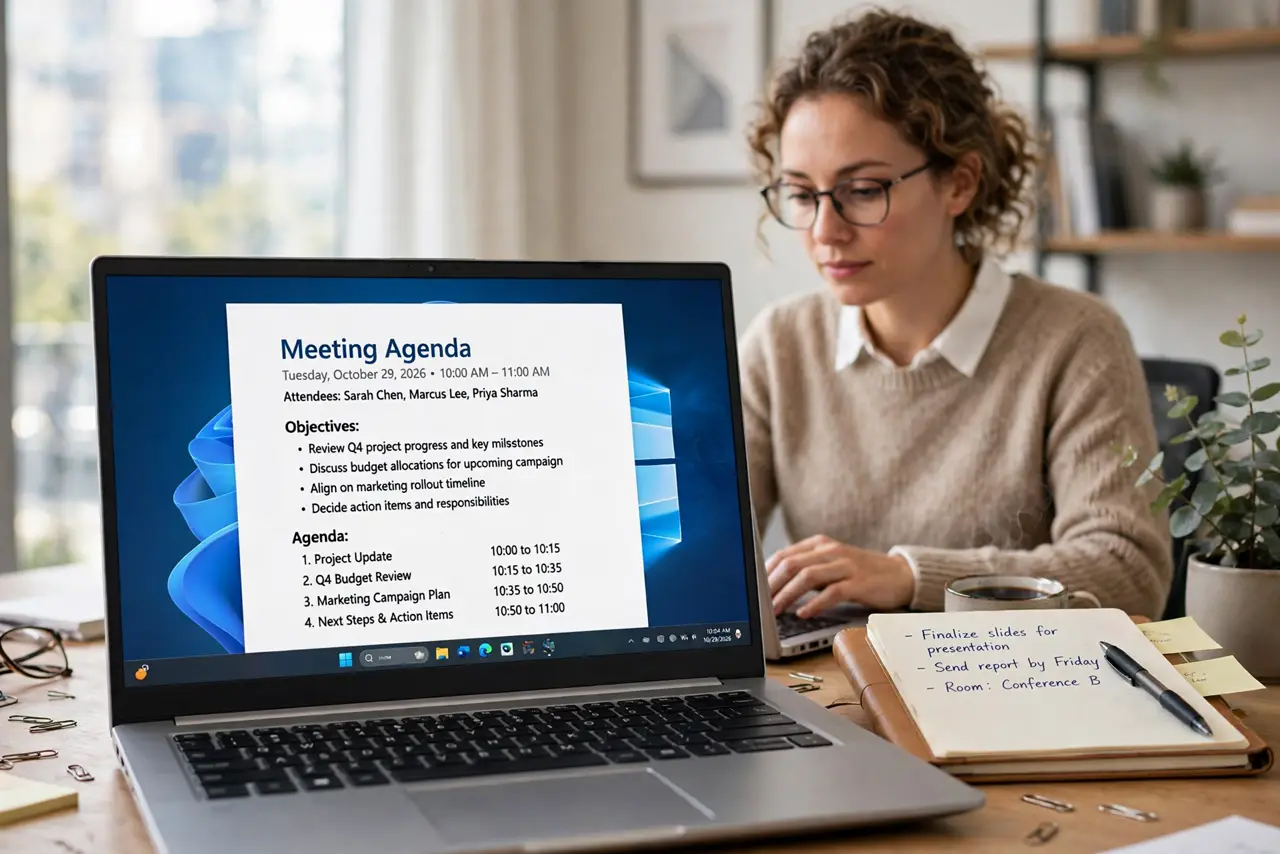
Quick fix: a good agenda lists decisions to make, not topics to discuss — send it a day ahead with the goal, the three questions to answer, and who owns each. Keep it to half a page. End every agenda with the decision format: decide, owner, deadline.
Follow these steps
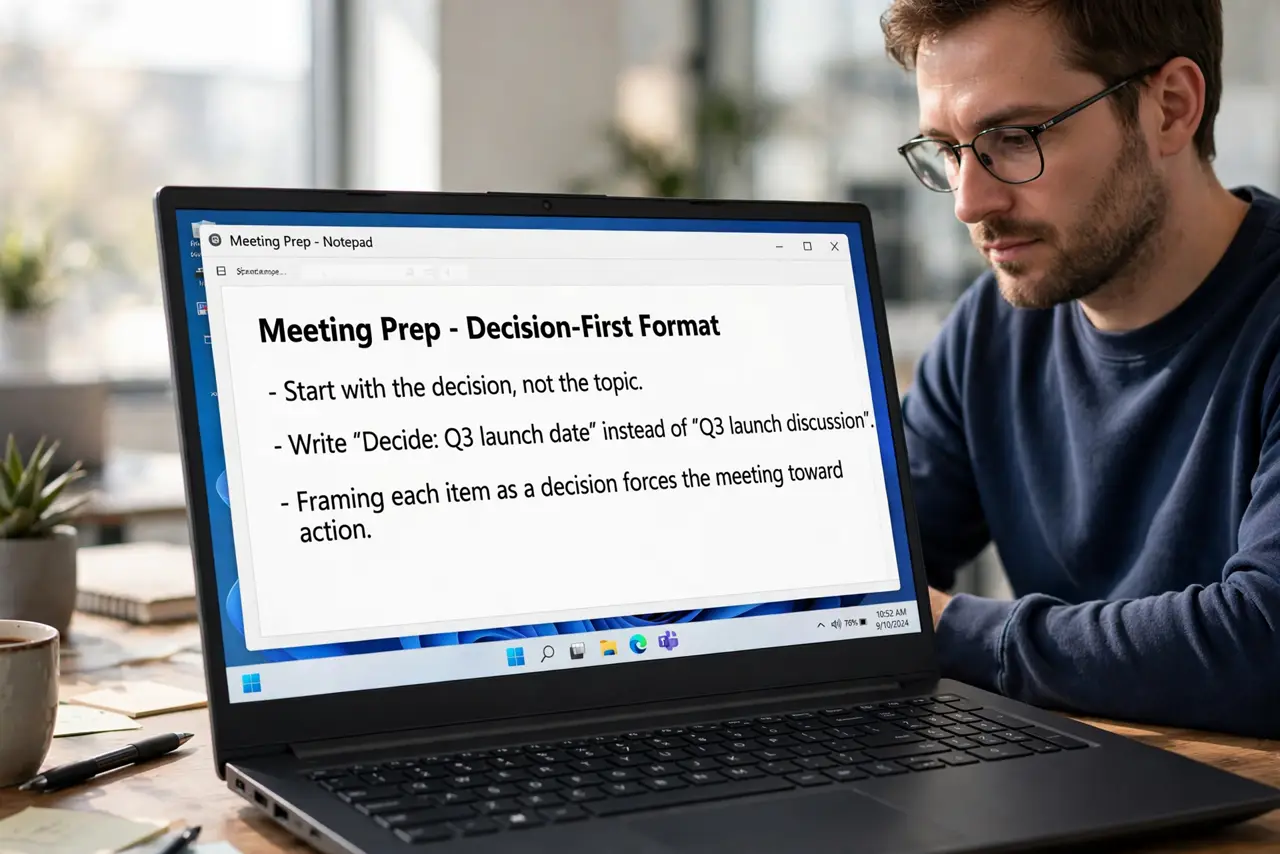
- Start with the decision, not the topic. Write 'Decide: Q3 launch date' instead of 'Q3 launch discussion'. Framing each item as a decision forces the meeting toward an outcome — the agenda writing guide shows the exact phrasing.
- Limit it to three questions. An agenda with eight items is a wish list. Pick the three questions that genuinely need the group, and push the rest to email or a document.
- Assign an owner to every item. Each agenda line gets a name — the person who presents it and drives it to a decision. Ownerless items drift; owned items close.
- Send it a day ahead, not an hour. An agenda sent the morning of the meeting gets skimmed in the elevator. A day ahead lets people arrive with answers instead of reactions.
- Add time boxes to each item. Five minutes for updates, fifteen for the decision. Time boxes make the 25-minute meeting realistic instead of aspirational.
- End with the decision format. Close the agenda template with three columns: Decision, Owner, Deadline. If the meeting cannot fill those in, the agenda was not ready.
What to avoid
- Do not write agendas as topic lists. 'Budget', 'Hiring', 'Roadmap' invite rambling; decision-framed items invite conclusions.
- Do not send the agenda at the last minute. A late agenda is decoration — early is the whole point.
- Do not invite ten people to a three-question agenda. Every extra attendee multiplies the drift; invite only the deciders and inform the rest after.
- Do not skip the pre-read. If people need context, attach it with the agenda — explaining background live burns the meeting's time.
Frequently asked questions
How long should an agenda be?
Half a page. If your agenda needs two pages, split the meeting — nobody reads a long agenda, and long agendas hide the real decisions.
What if nobody reads it anyway?
Start the meeting by asking one agenda question cold — social pressure teaches faster than reminders. Consistent agendas train readers within weeks.
Should standups have agendas?
A light one, yes — even three bullet prompts beat a free-form round. The template that gets read works for standups too.