Zelle Scam? Refunds Are Rare
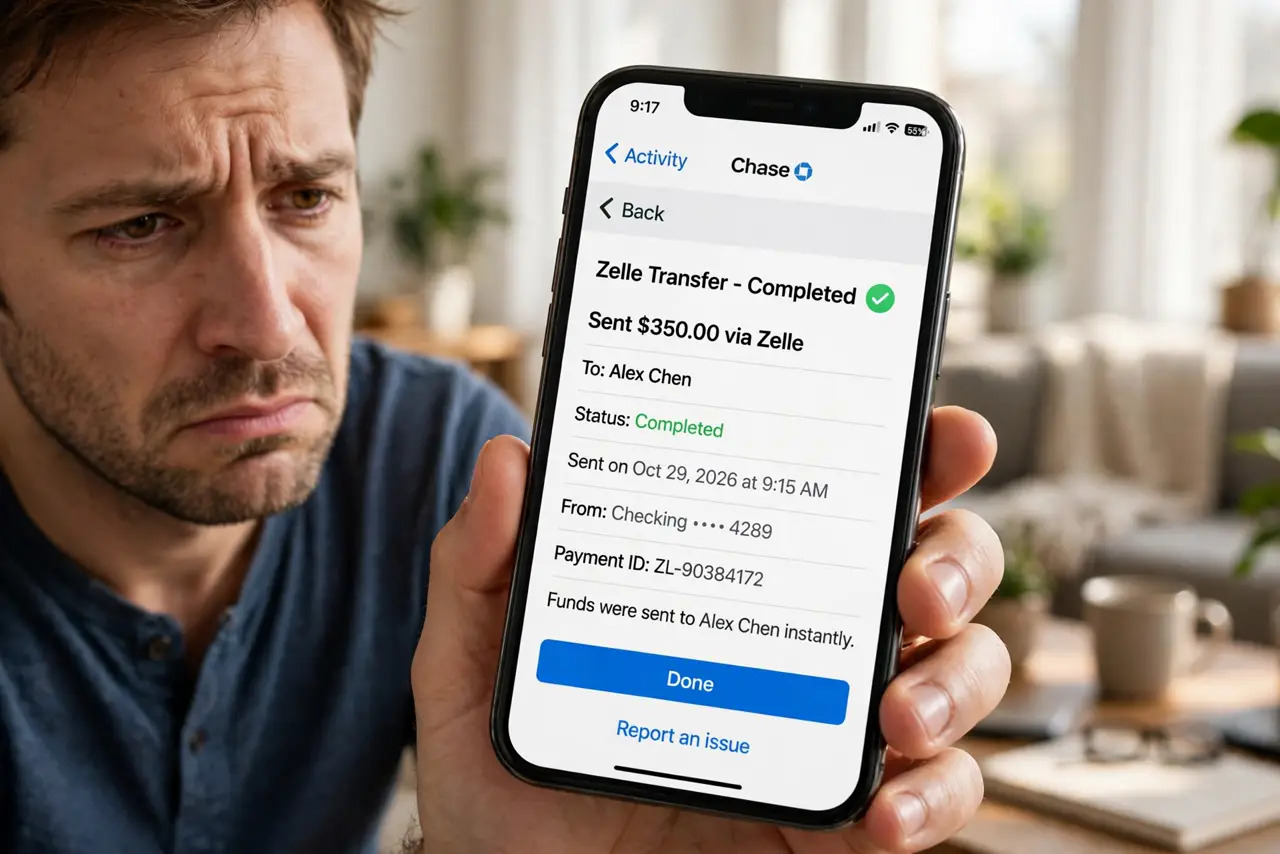
You sent money on Zelle to what turned out to be a scammer — and now the bank says the transfer can't be reversed. Zelle moves money instantly between accounts, which is exactly why scammers love it: authorized payments are nearly impossible to claw back. Prevention is the only reliable protection.
TL;DR / Quick Fix
Zelle payments are instant and usually irreversible — if a scammer tricks you into sending money, your bank will rarely refund it. Banks reimburse only unauthorized transfers, not ones you authorized yourself. Never send Zelle to strangers; verify recipients by a separate channel first.
Follow these steps
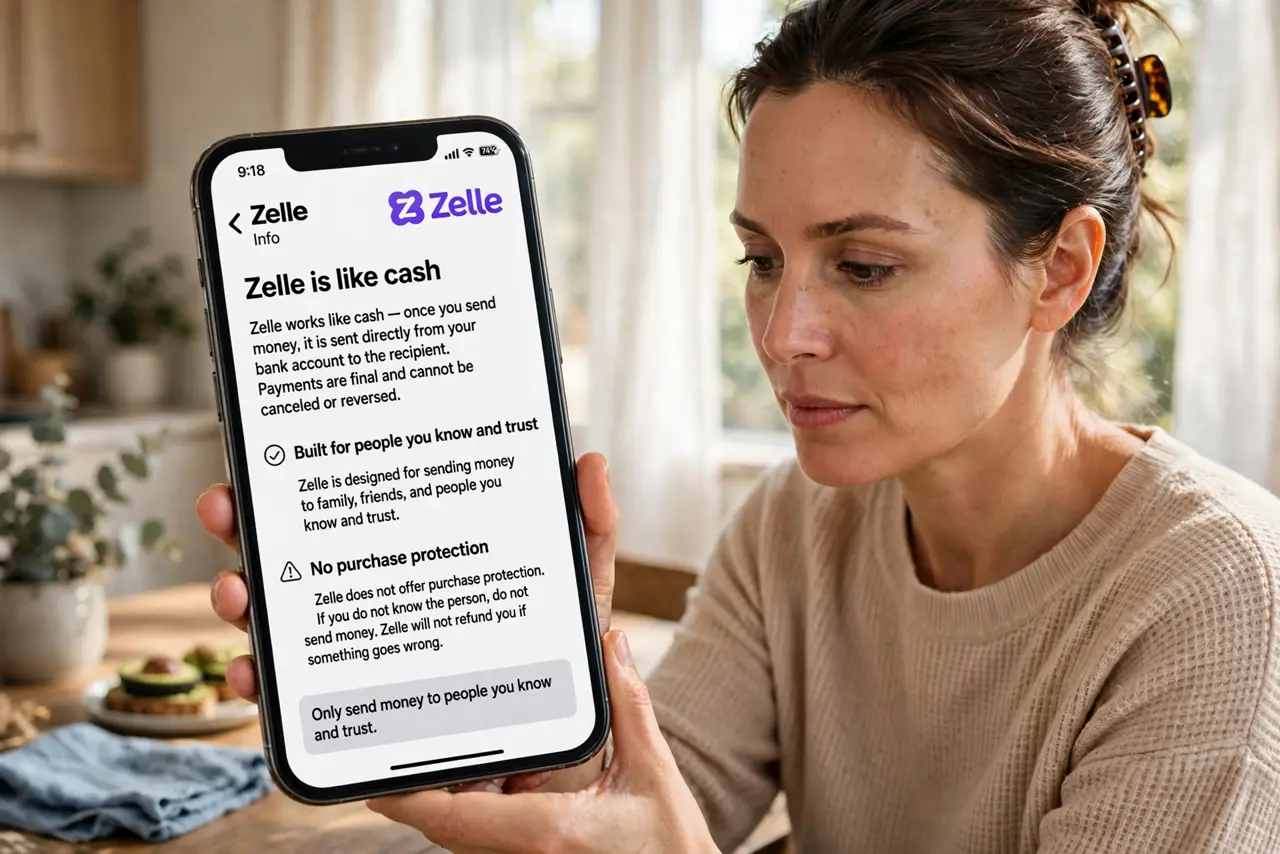
- Understand what Zelle is for. Zelle is built for sending money to people you know and trust — like cash. It is not a purchase protection system.
- Know the refund reality. Banks must reimburse unauthorized transfers (hacks). Transfers you authorized yourself — even to a scammer — are generally not refundable.
- Report it anyway. File a claim with your bank immediately and report to Zelle. Rare exceptions and partial recoveries happen, but don't count on them.
- Verify recipients before sending. Confirm the recipient's name, and for larger amounts send a $1 test first — see the wrong-person guide for the parallel risk.
- Beware the common lures. Fake buyers overpaying, 'bank fraud department' calls asking you to Zelle yourself, rental deposits — all use Zelle's irreversibility.
- Turn off Zelle if you don't use it. If you never send money this way, disable it in your banking app. You can't be tricked into a transfer you can't make.
What NOT to do
- Do not send Zelle to strangers for purchases. No buyer protection exists — once sent, the money is effectively cash handed over.
- Do not trust a caller claiming to be your bank's fraud department. Real banks never ask you to Zelle money to 'protect' it — hang up.
- Do not assume the bank will make it right. Authorized-payment scam losses are the victim's in nearly all cases — the fine print is explicit.
- Do not share Zelle confirmation codes with anyone. Codes are for your transactions; a stranger asking for one is mid-scam.
Frequently asked questions
Can my bank reverse a Zelle payment?
Only in narrow cases — true unauthorized access, or if the recipient's account is still holding the funds. Authorized scam payments are almost never reversed.
What if I was tricked — isn't that unauthorized?
Legally, no: you authorized the transfer, even under false pretenses. That distinction is exactly why scammers prefer Zelle.
Is Zelle safe for splitting bills with friends?
Yes — that's its designed use. Known people, small amounts, no strangers: the risk profile is completely different.