Zigbee vs Z-Wave?
You're choosing smart home gear and keep hitting two weird words: Zigbee and Z-Wave. Both are low-power mesh radios for sensors, bulbs, and locks — both need a hub — but they differ in frequency, range, and device selection. Here's how to pick without regret.
TL;DR / Quick Fix
Quick fix: Zigbee and Z-Wave are both low-power mesh radios for smart-home gadgets, and both need a hub. Z-Wave uses a less crowded frequency with slightly better range; Zigbee devices are more numerous and often cheaper. Pick whichever your hub and devices support — don't mix both unless you must.
Follow these steps
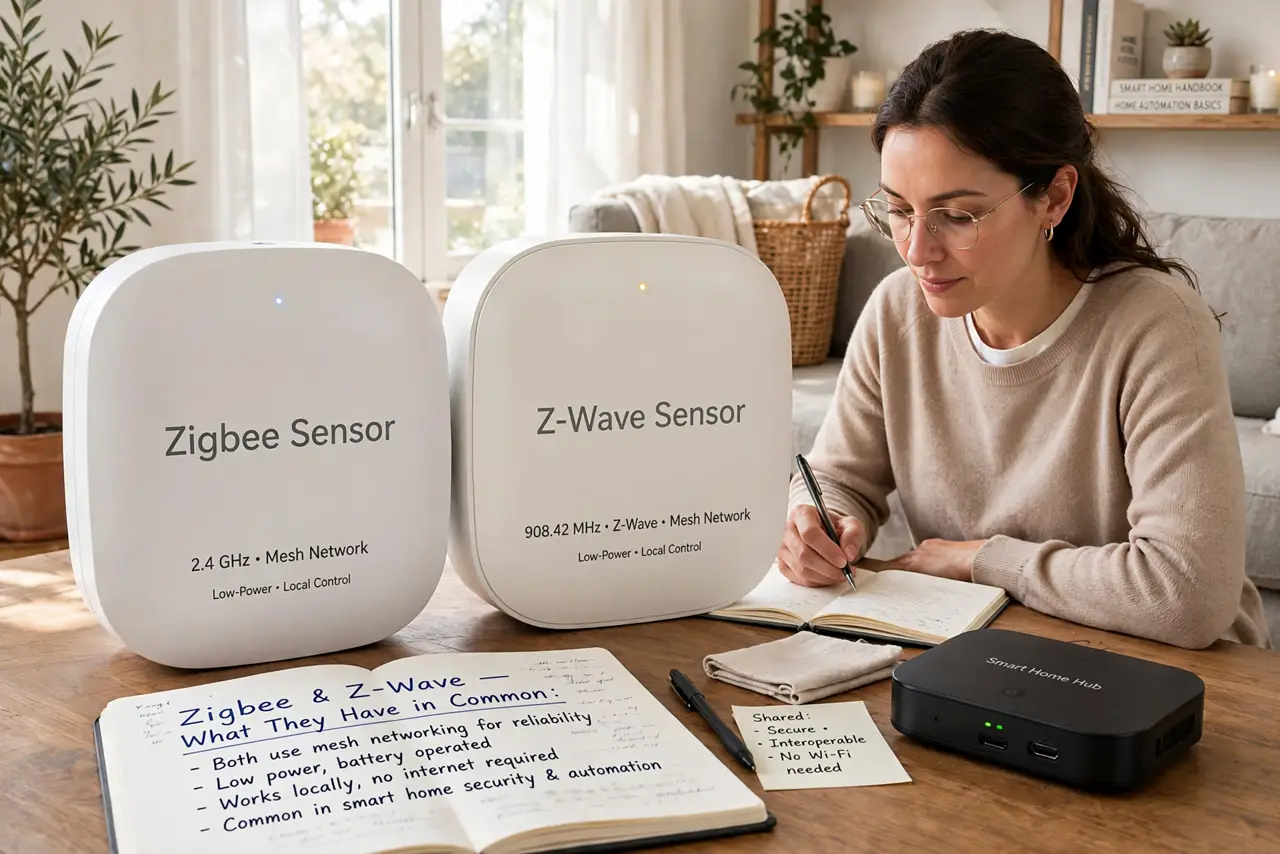
- Learn what they have in common. Both are mesh networks: each powered device relays for others, extending range through your home. Both sip battery — sensors run years on a coin cell. Both need a hub to reach your phone.
- Learn where Z-Wave wins. Z-Wave uses a sub-1 GHz frequency that dodges Wi-Fi interference and penetrates walls a bit better. Its certification is strict, so devices from different brands reliably interoperate.
- Learn where Zigbee wins. Zigbee devices are more numerous and often cheaper, with huge selection in bulbs and sensors. It runs on 2.4 GHz — the same band as Wi-Fi, so placement matters. See the interference notes.
- Check what your hub speaks. Your hub decides: most speak one or the other, some speak both. Buy devices matching your hub — a Zigbee bulb on a Z-Wave-only hub is a paperweight.
- Place the hub smartly. Central, elevated, and away from the Wi-Fi router — especially for Zigbee, which shares the 2.4 GHz band. A hub stuffed behind the router is the classic self-inflicted wound.
- Consider Matter before committing. New gear increasingly speaks Matter — read the Matter explainer and the hub guide to see whether you even need to pick a side anymore.
What NOT to do
- Do not expect Zigbee and Z-Wave to talk to each other. Different radios, different languages — no hub makes them interoperate directly.
- Do not buy devices without checking hub support. The protocol on the box must match a radio your hub actually has.
- Do not park a Zigbee hub next to your Wi-Fi router. Same 2.4 GHz band, maximum interference — separate them by a few feet at least.
- Do not assume newer always beats your current setup. A working Zigbee network isn't obsolete — replace on failure, not on fashion.
Frequently asked questions
Which is better, Zigbee or Z-Wave?
Neither universally — Z-Wave for range and reliability, Zigbee for selection and price. Match the choice to your hub and the devices you actually want.
Is Matter replacing both?
It's the industry's direction for new devices, but millions of Zigbee and Z-Wave devices will run for years. No rush to rip anything out.
What's the realistic range?
Indoors, roughly a room or two per hop — but mesh means hops chain together, so whole-home coverage is normal with enough powered devices.