Design a Morning Routine
Mornings feel like being ambushed: alarm, phone, email, rush. The chaos is not a character flaw — it is a design flaw, and routines are design. A good morning routine is small, repeatable, and built the night before. Pair it with an end-of-day shutdown and the two routines hold your whole day together.

TL;DR / Quick Fix
Quick fix: anchor your first hour with three simple habits — water, daylight, and one meaningful task — and prep everything the night before. Keep the phone away for the first 30 minutes. Start tiny and adjust weekly; consistency beats a perfect routine you abandon by Friday.
Follow these steps
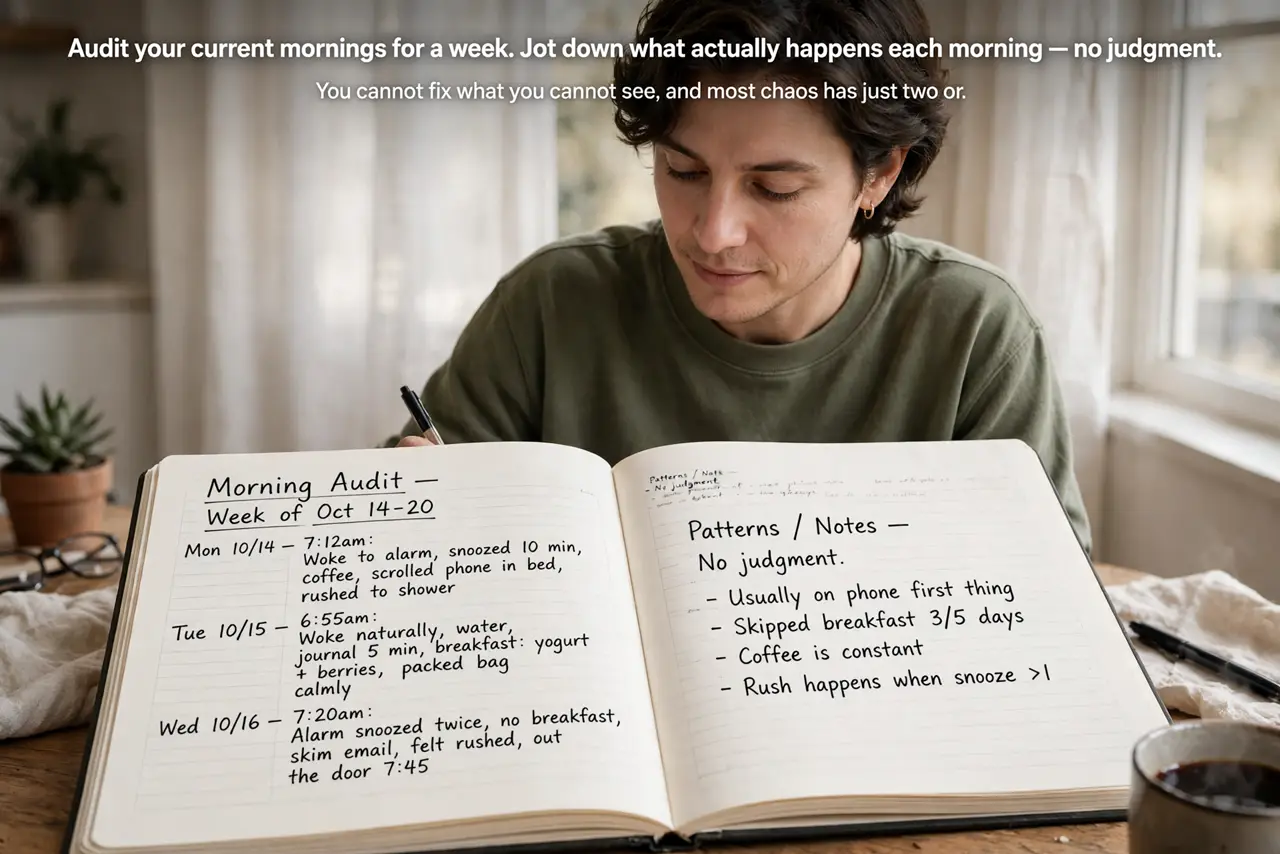
- Audit your current mornings for a week. Jot down what actually happens each morning — no judgment. You cannot fix what you cannot see, and most chaos has just two or three triggers.
- Protect the first 60 to 90 minutes. Treat the first hour as an appointment with yourself. No meetings, no email, no “quick checks” — this is the highest-leverage time of your day.
- Pick three anchors. Choose three tiny habits: a glass of water, daylight or a short walk, and one meaningful task. Three is enough — ten is a fantasy that collapses by Wednesday.
- Prep the night before. Lay out clothes, set up the coffee, and write tomorrow's top task before bed. Mornings are chaotic mostly because evenings were unprepared — the evening ritual fixes that.
- Keep the phone away for 30 minutes. Charge it outside the bedroom or leave it face-down. The phone is a slot machine of other people's priorities; your morning belongs to you first.
- Review weekly and adjust. Each Sunday, note what worked and drop what did not. A routine is a living design, not a vow — the weekly review habit keeps it honest.
What NOT to do
- Do not copy a 5 a.m. influencer routine wholesale. Their life is not yours — design around your actual schedule.
- Do not stack ten habits on day one. Start with three anchors; add more only after a month of consistency.
- Do not check email first thing. Email is everyone else's agenda for your day — it can wait 90 minutes.
- Do not steal from sleep to “gain” morning time. A routine built on exhaustion dies within two weeks.
Frequently asked questions
What if I am not a morning person?
Then design an evening or midday anchor routine instead. The principle — protected time plus tiny habits — works at any hour.
How long until it sticks?
Expect awkwardness for two weeks and automation around week six. Weekly tweaks beat white-knuckle willpower.
Should weekends follow the routine?
Loosely. Keep the anchors, drop the schedule — routines should serve life, not rule it.