Get Your Free Credit Reports
Everyone is entitled to free copies of their credit reports, yet most people never look. A quick review catches errors and unfamiliar accounts before they cost you real money. Here is where the legitimate free reports live, how often to check them, and what to do about surprises — without paying for monitoring you do not need.
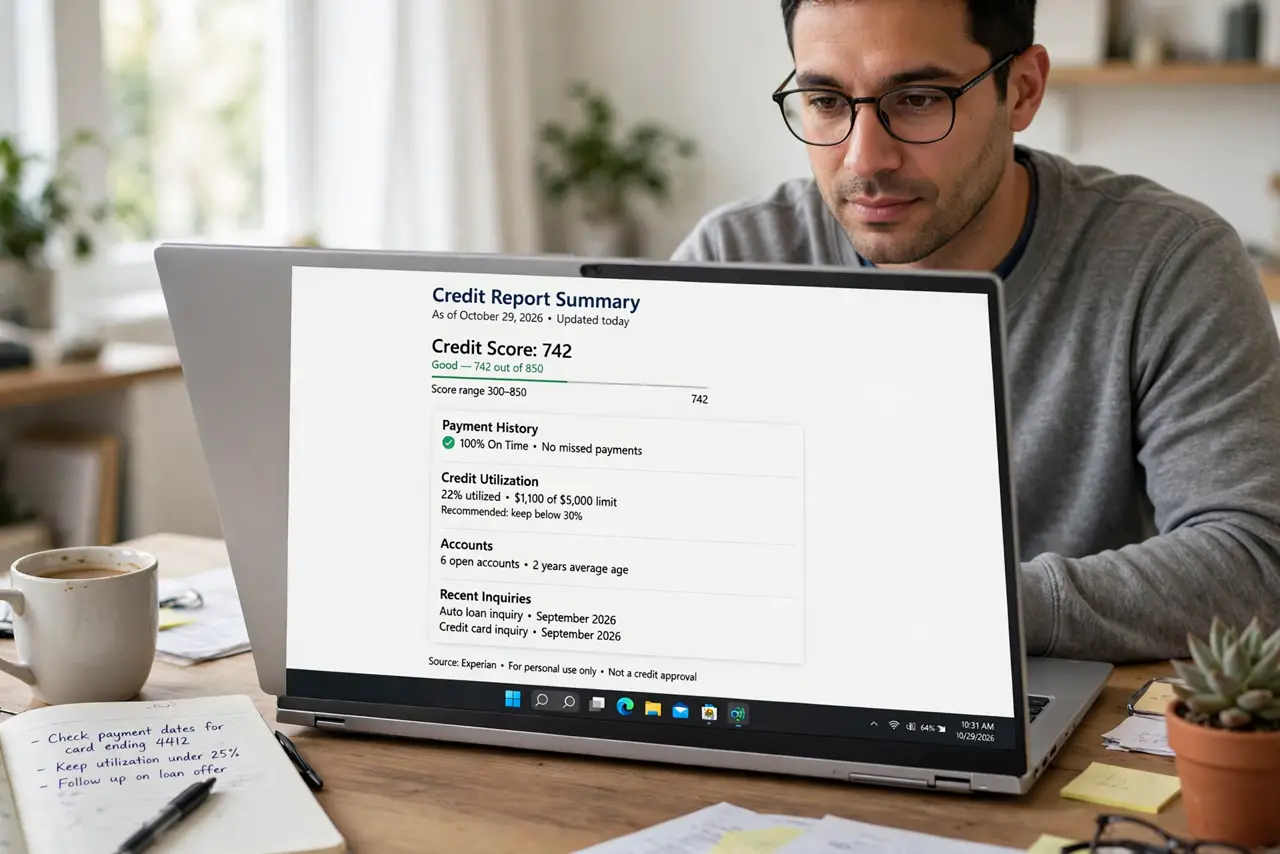
TL;DR / Quick Fix
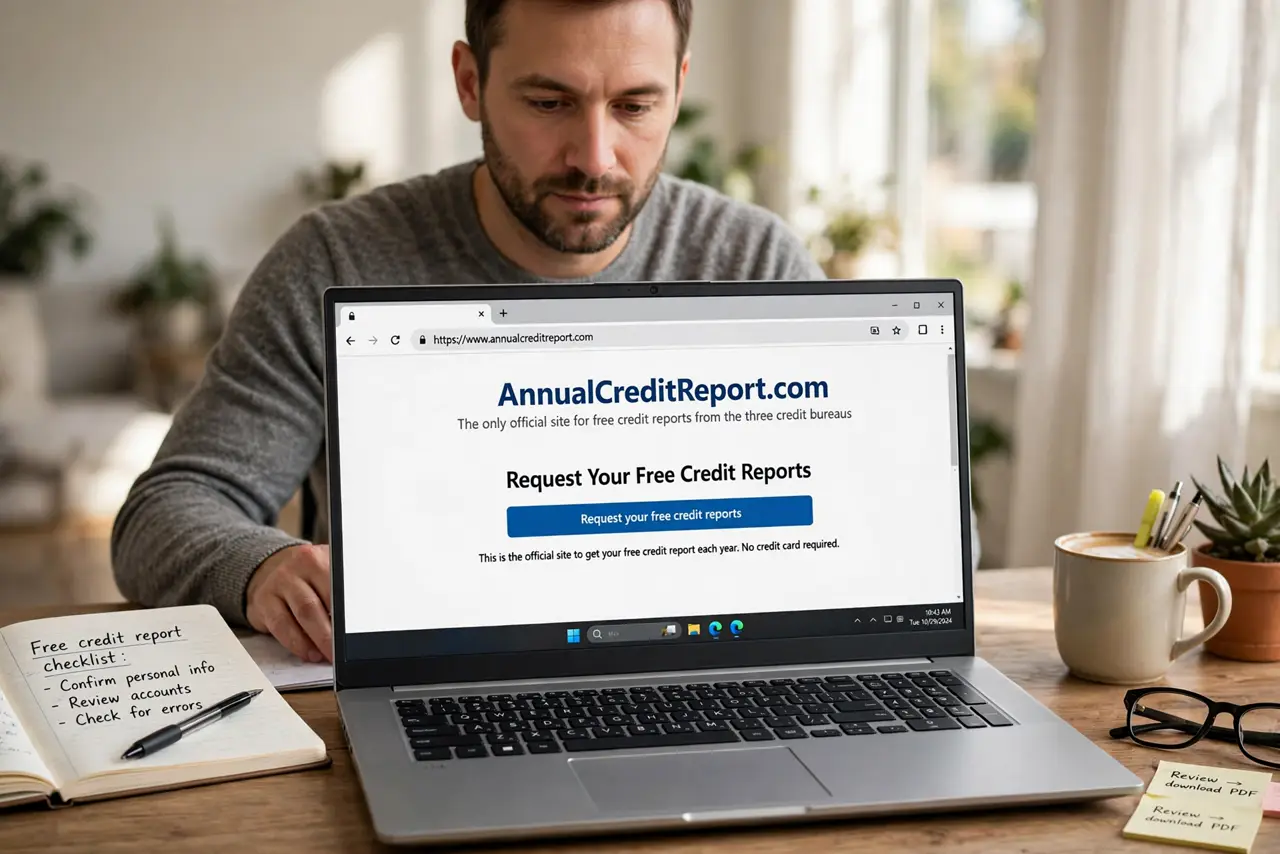
In the US you can get your credit reports free every week from AnnualCreditReport.com, the official source backed by the three bureaus. Pull one bureau at a time across the year, and look for unfamiliar accounts, wrong balances, and late marks. Dispute any errors with the bureau in writing.
Follow these steps
- Use the official source only. Type AnnualCreditReport.com yourself — it is the only site backed by the three bureaus. Other 'free report' sites exist to upsell monitoring subscriptions.
- Pull one bureau at a time. Equifax, Experian, and TransUnion each give you a report. Spacing them across the year means you are checking something every few months.
- Scan for the big three problems. Unfamiliar accounts, balances you do not recognize, and late payments you never made. Small oddities matter — identity theft often starts small.
- Dispute errors with the bureau. File the dispute online or by mail, keep copies of everything, and expect the bureau to investigate within about a month.
- Freeze your credit if something looks wrong. A freeze is free, does not hurt your score, and stops new accounts being opened in your name while you sort it out.
- Say no to paid monitoring upsells. For most people, free reports plus a freeze cover the real risks. Treat any unfamiliar account like a breach signal and act fast.
What NOT to do
- Do not buy your 'free' report from a lookalike site. Impostor domains sell subscriptions; the official source asks for no card.
- Do not panic over the score in a banking app. Lenders see slightly different numbers — the report details matter more than any single score.
- Do not close old cards to 'clean up.' The age of your accounts helps your score; closing them can hurt it.
- Do not ignore one small unfamiliar account. Dispute it now — it is either an error or the start of something worse.
Frequently asked questions
Are the free reports really free, with no card required?
Yes. The official site never asks for payment details for the reports themselves. Any page demanding a card for a 'free' report is not the official source.
Will checking my own report hurt my score?
No. Your own checks are soft inquiries and never affect the score. Only lenders' hard inquiries count.
Why do my three reports show different things?
Lenders do not all report to all three bureaus, so differences are normal. That is exactly why checking each bureau matters.