Protect Grandparents from Scams
Scammers target older relatives deliberately — they answer unknown calls, they trust authority, and they grew up in a world where a caller ID meant something. The grandparent scam, the fake tech support call, the romance scam: they all exploit politeness and panic. Protection is mostly about one rehearsed habit, not technology.
TL;DR / Quick Fix
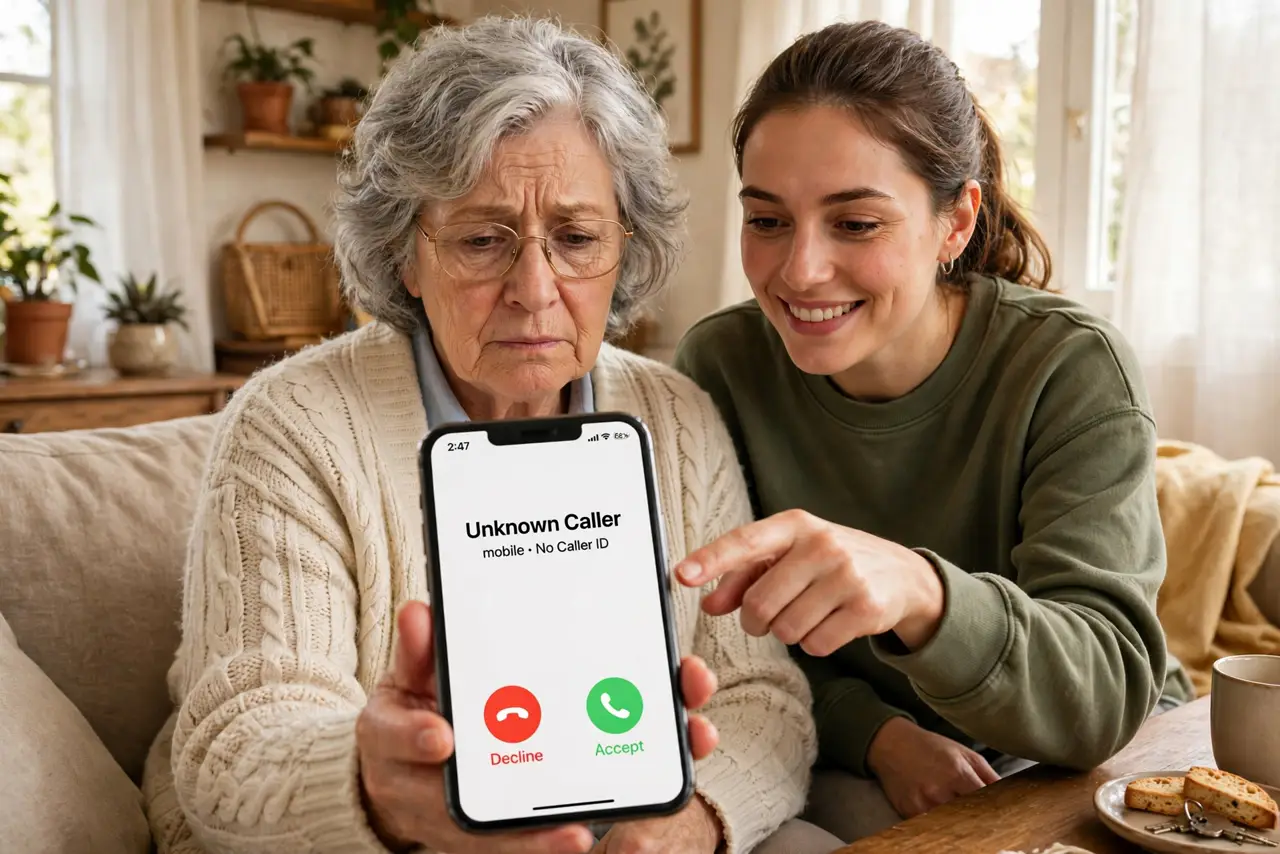
Quick fix: teach one rule — hang up on unexpected callers and call back on a known number. Silence unknown callers on their phone. Make yourself the verification contact: anyone asking for money or codes means calling you first. Rehearse it; the habit matters more than the lecture.
Follow these steps
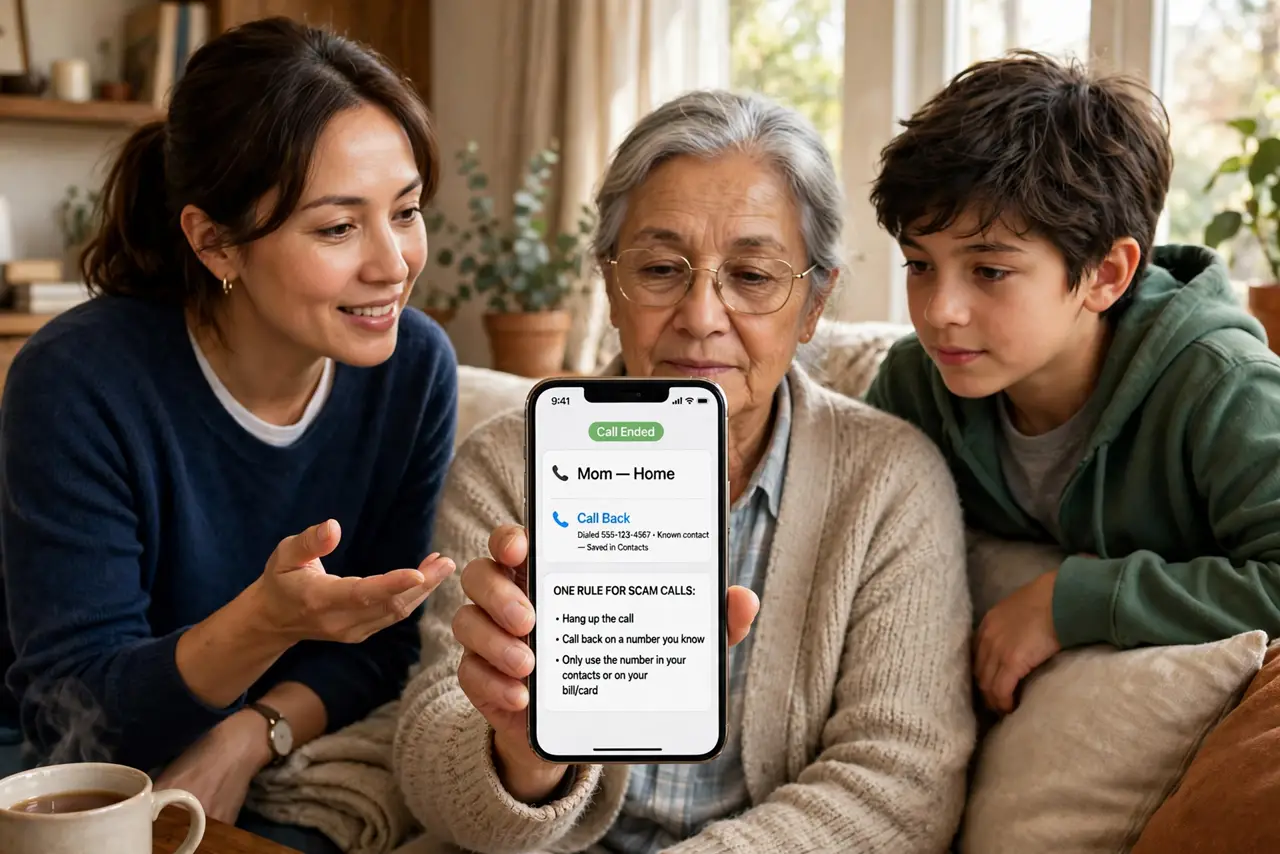
- Teach the one rule. Hang up on unexpected callers, then call back on a known number. One rule, rehearsed until automatic — complexity is the enemy. Practice it out loud together, like a fire drill.
- Set up call screening. Enable silence unknown callers and any carrier spam filtering. Fewer scam calls reaching them means fewer decisions they have to make.
- Become the verification contact. Make the deal explicit: anyone asking for money, gift cards, or codes means calling you first — no exceptions, no embarrassment. Put your number on speed dial.
- Explain the greatest hits. Walk through the common scripts: the grandparent emergency scam, the fake bank call, the tech support pop-up. Forewarned is forearmed — recognition kills panic.
- Remove the shame. Stress that smart people fall for these scams daily and that telling you immediately is always the right move. Shame is what scammers count on to keep victims quiet.
- Check in regularly. Scam tactics evolve. A brief monthly check-in — any weird calls lately — keeps the habit alive and catches new tricks early.
What NOT to do
- Do not lecture about technology. Scam defense is about habits, not understanding spoofing — one rehearsed rule beats a seminar.
- Do not make them feel foolish. Condescension makes them hide the next attempt instead of reporting it.
- Do not rely on them spotting red flags mid-call. Pressure shuts down judgment — the rule must be hang up first, think later.
- Do not skip the practice. Knowing the rule intellectually is not the same as hanging up on a real, urgent-sounding caller.
Frequently asked questions
What is the grandparent scam?
A caller pretends to be a grandchild in trouble — accident, arrest — and begs for money wired urgently and secretly. The secrecy request is the tell.
Should I take away their phone?
No — isolation is not protection. A configured phone with call screening plus the one rule keeps them connected and safer.
What if they already sent money?
Act fast: call the bank, report to the police and fraud agencies, and preserve every message. Speed matters, and it is never their fault.