Extended Warranties? Worth It?
At every checkout — laptops, TVs, appliances — someone offers an extended warranty: pay now, and repairs are covered for extra years. Sometimes it is peace of mind; often it is profit margin dressed as protection. Here is the honest math on when extended warranties pay and when to walk away.
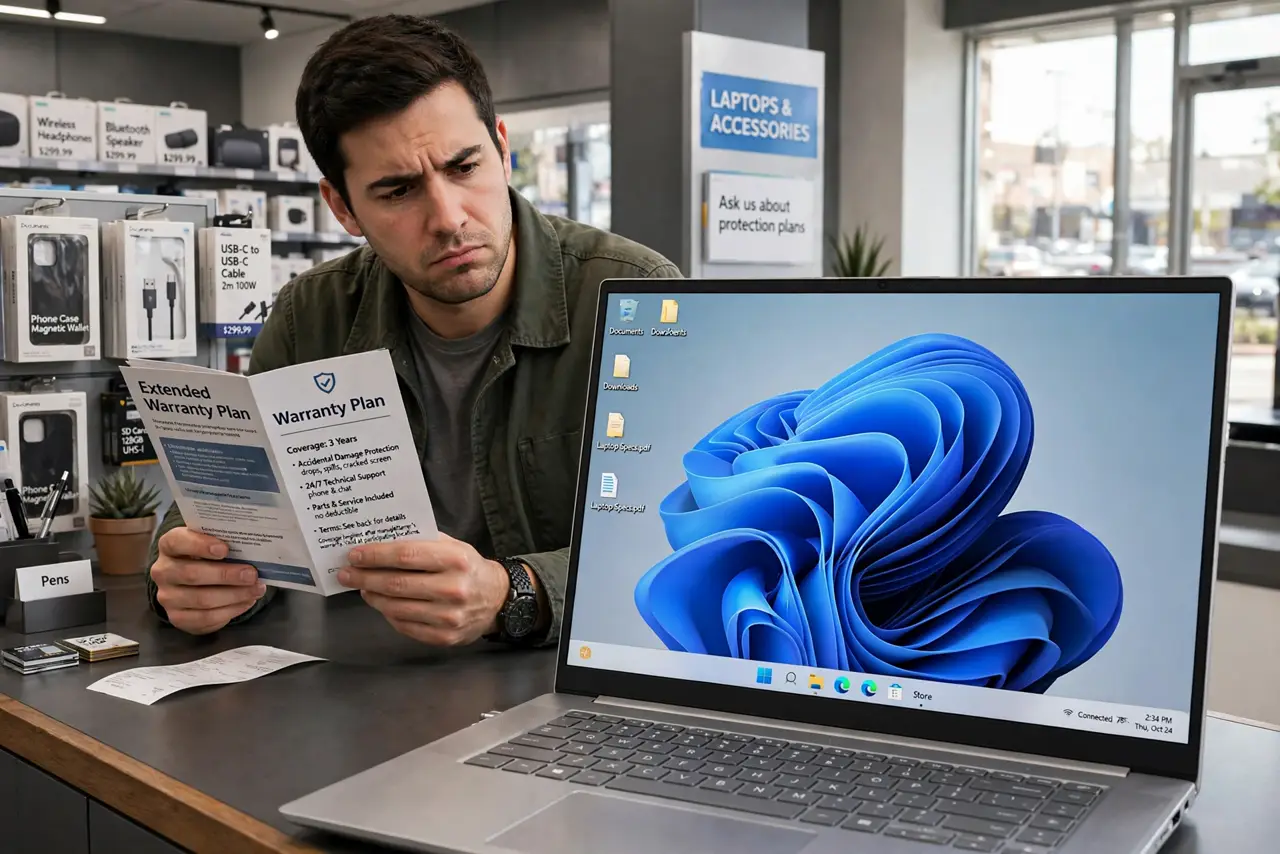
TL;DR / Quick Fix
Quick fix: extended warranties are rarely worth it for cheap, reliable gadgets — the math favors the seller. Consider one only for expensive items with costly repairs you could not comfortably afford, from the manufacturer rather than a third party. Always read what is excluded before paying.
Follow these steps
- Do the expected-value math. A $200 warranty on a $800 laptop only pays if repairs exceed $200 in the covered window — and most devices never need a repair. Sellers profit because most buyers never claim.
- Check what the standard warranty covers. Many credit cards add a free extra year to manufacturer warranties, and consumer law in some regions already extends protection. You may be buying coverage you already have.
- Read the exclusions first. Accidental damage, batteries, and 'wear and tear' are commonly excluded — precisely the failures people expect covered. The fine print decides the value, not the brochure.
- Prefer manufacturer over third-party. Maker warranties use genuine parts and real service networks. Third-party plans add claim friction, repair caps, and fine-print denials — compare the AppleCare model as the gold standard.
- Consider the item's repair cost. A $2,000 laptop with a $600 screen replacement is a different bet than a $150 printer. Insure against disasters you cannot afford, not inconveniences you can.
- Self-insure cheap gadgets. Put the warranty money in a savings pot instead — across many gadgets, you come out ahead. Reserve real warranties for the few expensive, fragile items.

What NOT to do
- Do not buy the warranty under checkout pressure. It is always available later within the eligibility window — decide at home.
- Do not insure cheap gadgets. A warranty costing 25% of the item price is bad math on reliable electronics.
- Do not skip the exclusions. Batteries and accidents are the usual gotchas — read them before paying.
- Do not buy third-party plans blindly. Claim denial stories cluster around third parties, not manufacturers.
Frequently asked questions
Are extended warranties ever worth it?
Yes — for expensive, fragile, hard-to-repair items (folding phones, high-end laptops) where one repair exceeds the premium and the plan is from the maker.
What about phone insurance vs extended warranty?
Phone insurance covers loss, theft, and damage; extended warranties cover defects. Different products — the phone insurance guide compares.
Can I cancel an extended warranty?
Usually yes, with a pro-rated refund within the terms. Check the cancellation clause before buying — easy cancellation is a good sign.