Noise Cancelling? How It Works
You put on the headphones, the airplane drone vanishes, and it feels like magic — but noise cancelling is physics, not magic. Tiny microphones listen to the noise around you and the headphones play its exact opposite, cancelling it out. Understanding the trick helps you buy the right kind and use it well.
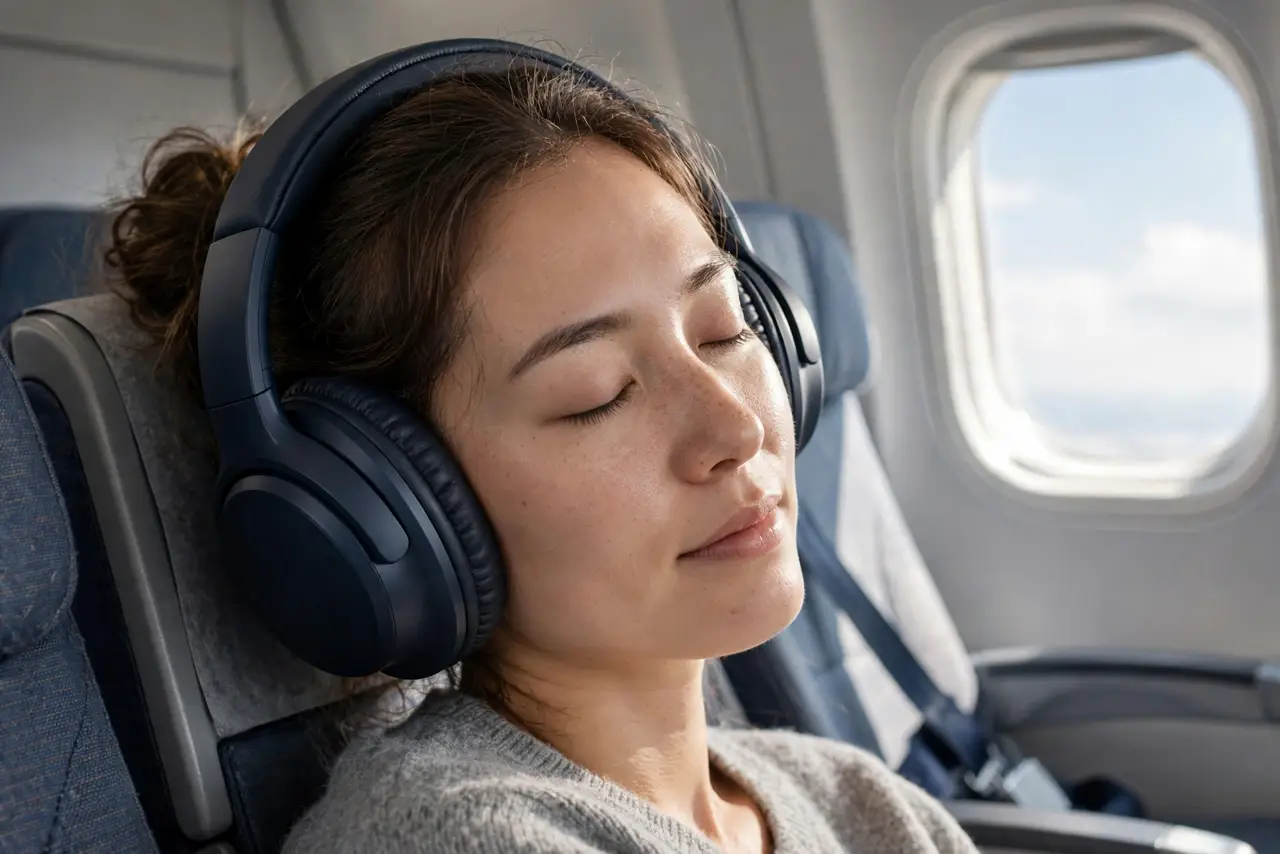
TL;DR / Quick Fix
Quick fix: noise cancelling erases steady low sounds — engines, fans, hum — by playing their opposite. It struggles with sudden sharp sounds like voices and clatter. For travel and offices it is transformative; for total silence, pair it with the right fit. Test before long flights.
Follow these steps
- Learn the anti-noise trick. Mics on the earcups sample ambient sound; the headphones generate an inverted copy. The two waves cancel — steady drones vanish best.
- Know what it cannot erase. Sudden, irregular sounds — talking, keyboard clatter, a baby crying — change too fast to cancel. See open vs closed backs for how the earcup design helps with the rest.
- Expect the pressure feeling. Some people feel a slight 'pressure' with strong cancelling. It is normal and fades — or pick a milder mode if it bothers you.
- Use it for travel and offices. Planes, trains, and open offices are the killer use cases — constant low-frequency drone is exactly what the tech erases.
- Mind Bluetooth quirks on wireless pairs. Wireless stutter can hit cancelling headphones in busy environments — keep firmware updated and the phone close.
- Test the fit first. A poor seal leaks noise the electronics cannot fix. Fit matters as much as the cancelling circuitry.
What NOT to do
- Do not expect silence. Cancelling reduces noise dramatically; it does not create a vacuum.
- Do not wear them for situational awareness. Traffic, announcements, and people talking to you get muffled — that is the point, and the risk.
- Do not crank the volume to 'help' the cancelling. The tech works at any volume; loud music plus cancelling just means loud music.
- Do not assume all 'noise cancelling' is equal. Cheap implementations barely dent an airplane drone — read real reviews, not box claims.
Frequently asked questions
Does noise cancelling damage hearing?
No evidence of harm — it reduces the noise reaching your ears, which usually means you listen at lower, safer volumes.
Why do voices still come through?
Voices are irregular and mid-frequency — the hardest profile to cancel. The tech targets steady lows like engines.
Can I use it without music?
Yes — most pairs run cancelling alone, which is exactly what frequent flyers do for naps.