Studio Headphones? Basics
Studio headphones promise honest, flat sound — what the recording actually sounds like, without the bass boost of consumer headphones. They are beloved by musicians, editors, and anyone tired of hyped audio. But 'studio' on the box does not guarantee quality, and flat sound surprises people expecting thump. Here is how to choose a pair that earns the name.

TL;DR / Quick Fix
Quick fix: studio headphones aim for flat, accurate sound — great for editing, less exciting for casual listening. Choose closed-back for recording and noisy rooms, open-back for mixing in quiet spaces. Comfort matters as much as sound. Ignore the word 'studio' on cheap pairs.
Follow these steps
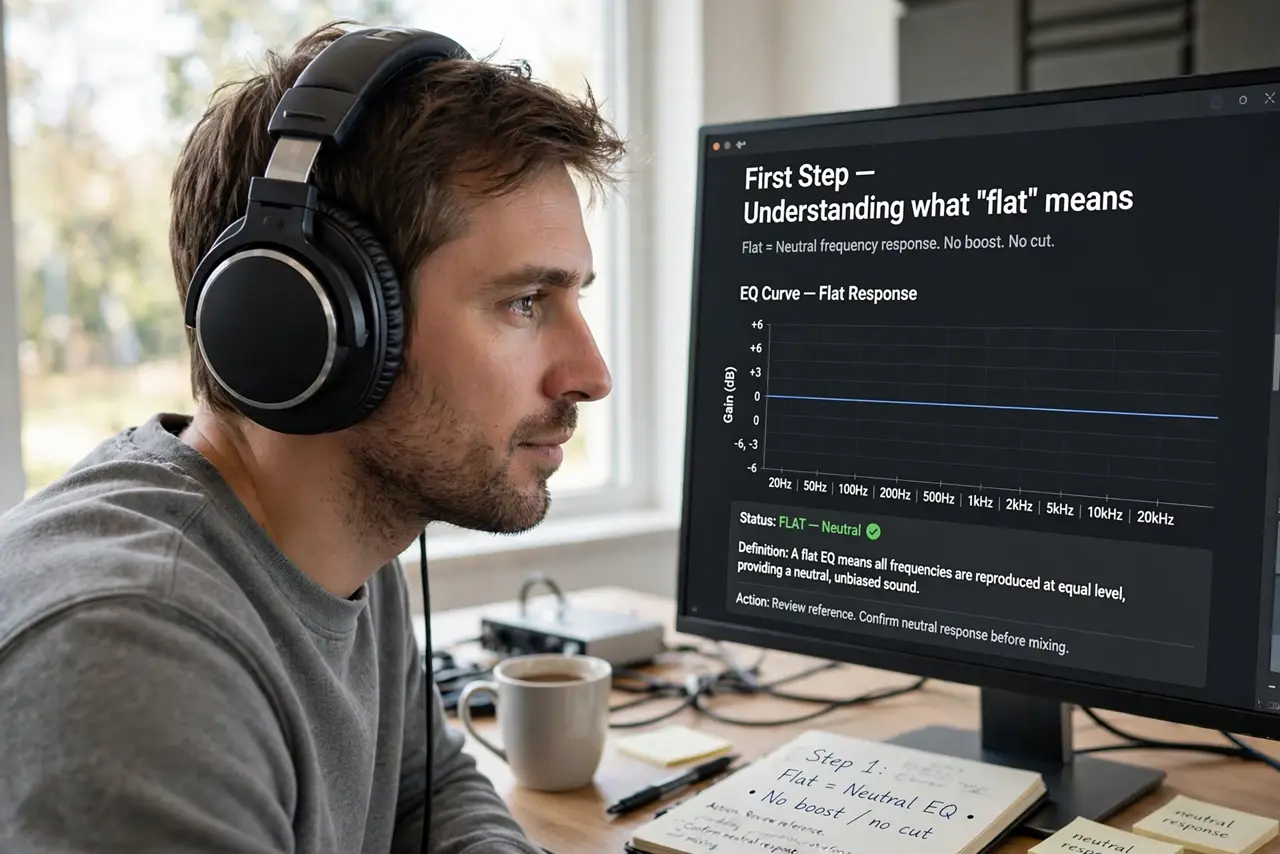
- Understand what 'flat' means. Studio headphones reproduce sound without boosting bass or treble. Music sounds less exciting than on consumer headphones — that is the point: you hear the recording as it is. Give your ears a week to adjust before judging.
- Choose closed-back or open-back. Closed-back seals sound in and out — best for recording, commuting, and shared rooms. Open-back leaks sound but feels more natural and spacious — best for mixing in a quiet room. See the open vs closed breakdown if you are torn.
- Prioritize comfort highly. You will wear these for hours. Check clamping force, ear-pad depth, and weight in reviews — a great-sounding headphone you cannot wear is a paperweight. Replaceable pads extend life enormously.
- Check impedance and your source. High-impedance studio models need a headphone amp or audio interface to get loud; low-impedance ones run fine from a phone or laptop. Match the headphone to what you will plug it into.
- Ignore 'studio' on bargain pairs. The word is unregulated marketing. A well-reviewed $80 headphone from a known maker beats a $40 'PRO STUDIO' mystery pair every time. Reviews from audio sites, not star counts, are the filter.
- Test with music you know. Judge headphones with tracks you know intimately — you will hear differences instantly. Store demos with unfamiliar music tell you almost nothing.
What NOT to do
- Do not buy open-back for the office. Everyone around you hears your audio, and you hear them — open-back is for quiet rooms only.
- Do not expect bass thump. Flat studio sound surprises bass lovers; if you want thump, buy fun consumer headphones instead.
- Do not ignore comfort. Hours of wear punish bad headbands and shallow pads more than any sound flaw.
- Do not trust the word 'studio' alone. It is marketing, not a certification — verify with real reviews.
Frequently asked questions
Are studio headphones good for everyday listening?
They are excellent if you value accuracy, but bass-heavy genres sound leaner than on consumer pairs. Many people love them once adjusted; some miss the thump.
Do I need an amplifier?
For low-impedance models, no — a phone or laptop drives them fine. High-impedance classics need an amp to reach proper volume.
Closed-back or open-back for gaming?
Closed-back: it blocks room noise and keeps game audio private. Open-back's spaciousness is nice but the leakage annoys anyone nearby.