How Noise Cancelling Works
Put on noise-cancelling headphones and the world hushes — along with a strange “pressure” feeling in your ears. How does silence get manufactured, and why does it feel weird? The trick is anti-noise: sound fighting sound. Understanding it also explains when to switch to transparency mode instead.
TL;DR / Quick Fix
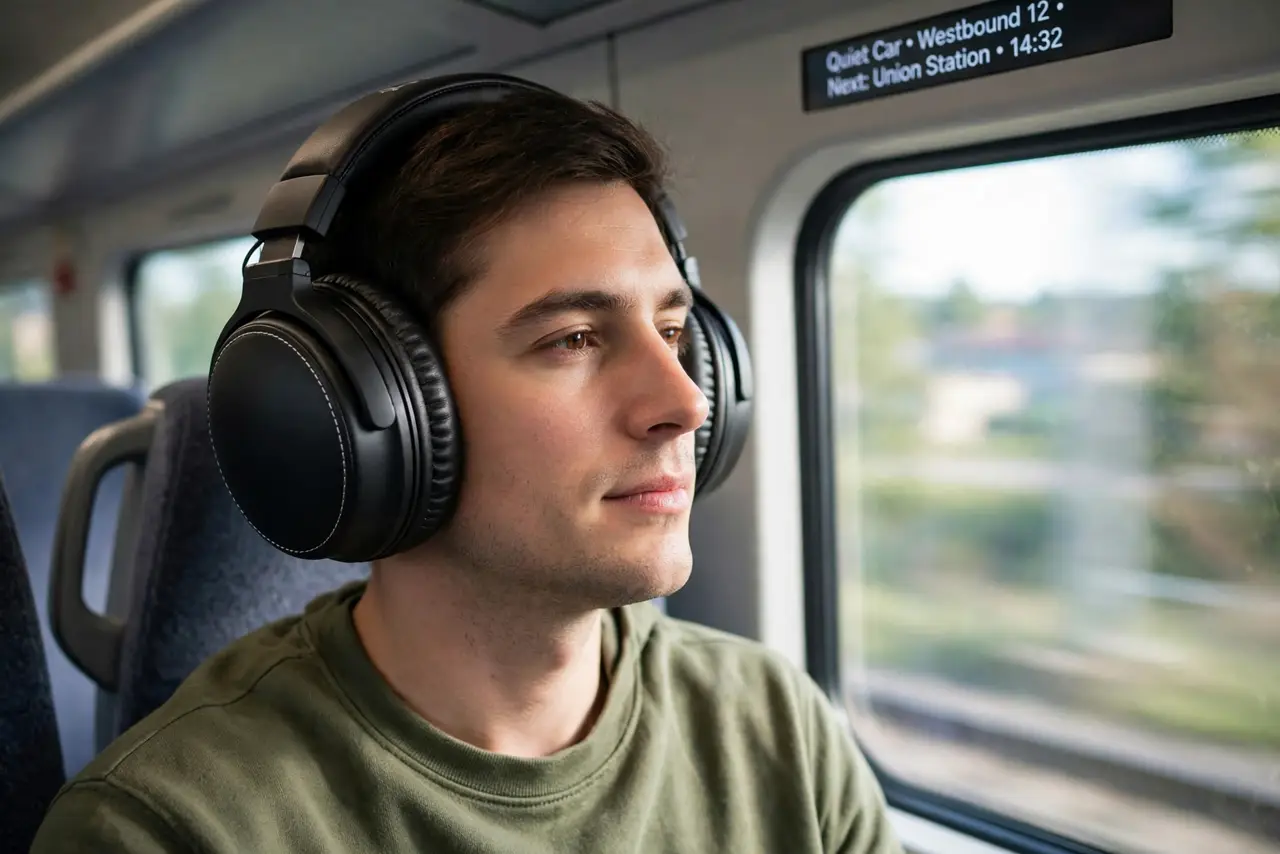
Quick fix: noise cancelling uses microphones to hear outside noise, then plays its exact opposite to cancel it — that's why low rumbles vanish but sudden shouts don't. The 'pressure' feeling is your brain reacting to unnatural silence, not actual pressure. A good seal makes ANC dramatically more effective.
Follow these steps
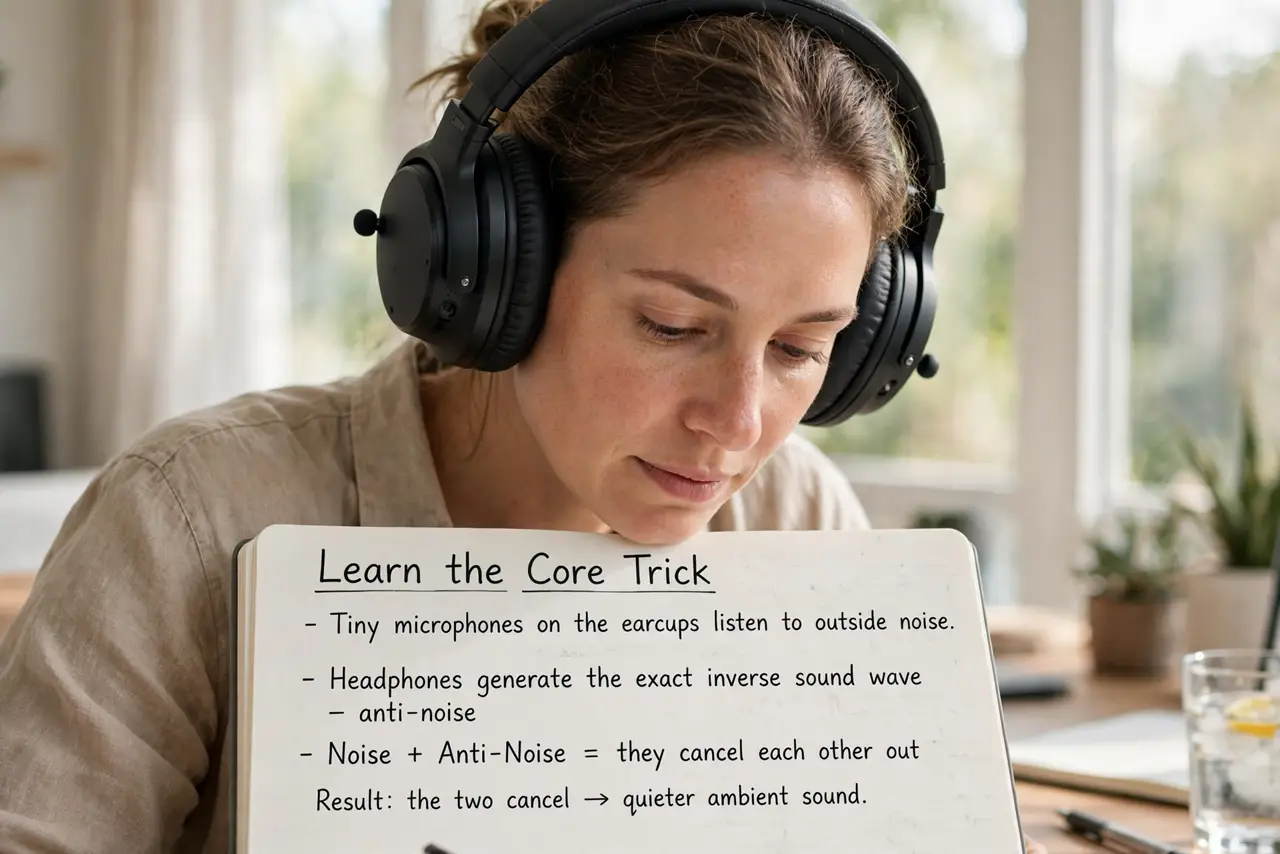
- Learn the core trick. Tiny microphones on the earcups listen to outside noise. The headphone then generates the exact inverse sound wave — anti-noise — and the two cancel out before reaching your ear.
- Understand why rumbles vanish. Low, steady sounds (engines, air conditioners) are predictable, so the inverse wave matches perfectly. ANC was literally invented for airplane drone.
- Understand what it cannot cancel. Sudden, sharp sounds — a shout, a clap, a dropped tray — change too fast for the system to invert in time. ANC hushes the world; it does not mute it.
- Learn why it feels like pressure. Your brain expects low background rumble; when ANC removes it, the absence registers as pressure or fullness. It is perception, not air pressure — and most people stop noticing within days.
- Know the seal matters enormously. ANC plus a poor ear seal is like air conditioning with the windows open. The right ear tips can matter more than the ANC chip itself.
- Know when to switch it off. For conversations, street awareness, and announcements, transparency mode pipes the world back in — ANC is for the drone, not for life.
What NOT to do
- Do not expect total silence. ANC plus music at moderate volume is bliss; ANC alone in a quiet room just sounds slightly odd.
- Do not wear ANC for situational awareness. Streets, bike lanes, and platforms demand ears — use transparency mode there.
- Do not blame the “pressure” on damage. The sensation is perceptual and harmless; real ear pain is different — see a doctor for that.
- Do not pay for ANC you will not use. If you listen only in quiet rooms, the premium buys little — see open vs closed.
Frequently asked questions
Does ANC damage hearing?
No — it reduces the noise you need to overcome, so most people listen at lower volumes, which protects hearing.
Why do voices still come through?
Voices are mid-frequency and irregular — the hardest combination for anti-noise to cancel. Physics, not a defect.
Can I use ANC without music?
Yes, many do for focus or sleep on planes. Just mind battery life and your surroundings.