The Reuse Domino Effect
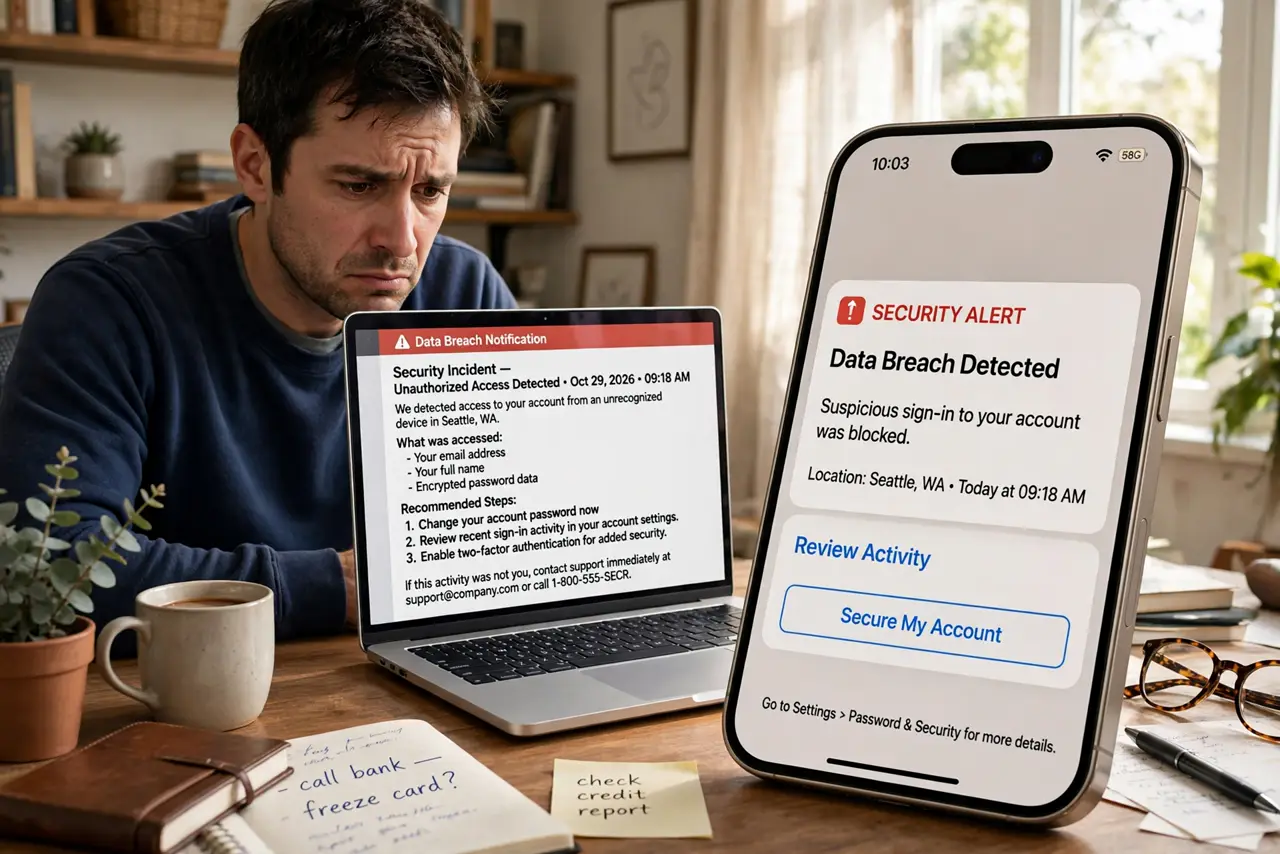
One password for everything is comfortable — until a forum you joined in 2015 gets breached and attackers try your email and password on your bank, your store accounts, and your social media within minutes. This automated trying-everywhere is called credential stuffing, and reused passwords make it trivially effective. One breach becomes every account. Here is how the domino falls and how to stop it. The length guide covers making each password strong.
TL;DR / Quick Fix
Quick fix: stop reusing passwords — when one site gets breached, attackers automatically try your email and password on banks, stores, and social media. A password manager with unique passwords per site breaks the chain completely. Start with your email and bank accounts today, since those unlock everything else.
Follow these steps
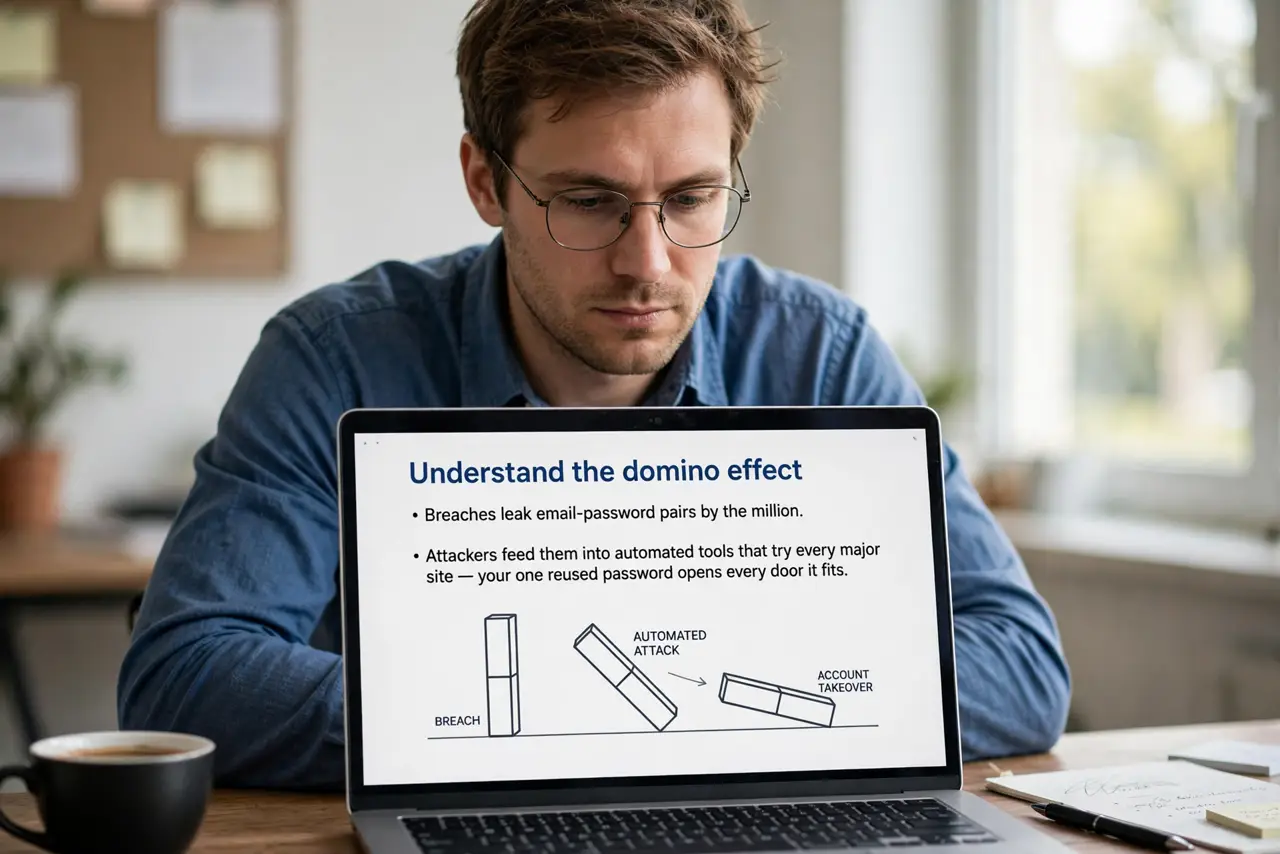
- Understand the domino effect. Breaches leak email-password pairs by the million. Attackers feed them into automated tools that try every major site — your one reused password opens every door it fits.
- Check if you are already exposed. Breach-lookup services let you check whether your email appears in known leaks. Assume the worst if you have reused passwords for years.
- Prioritize email and banking first. Your email resets every other password, so it is the crown jewel. Give email and banking unique, long passwords today — everything else follows.
- Get a password manager. Memorizing dozens of unique passwords is impossible; managers make it effortless. One master passphrase unlocks unique random passwords everywhere.
- Change reused passwords gradually. Start with the critical accounts, then work through the rest over weeks. Perfect is the enemy of done — every unique password weakens the domino.
- Turn on breach alerts. Many managers and browsers warn you when a saved password appears in a new breach. Let the tool watch while you live your life.
What NOT to do
- Do not assume small sites do not matter. Attackers breach tiny forums precisely to harvest passwords for big targets.
- Do not 'fix' reuse with small variations. Password1, Password2, Password3 fall to the same automated guessing.
- Do not trust security questions as backup. They are guessable and often public — treat them as second passwords, not safety nets.
- Do not wait for a breach notice. By the time you are notified, the domino may already be falling.
Frequently asked questions
What is credential stuffing?
Automated login attempts using stolen email-password pairs across many sites. It works because so many people reuse passwords.
I have used one password for years — am I doomed?
Not if you act now. Change the critical accounts first, then work through the rest. Past reuse only matters until you replace it.
Do password managers get breached too?
Reputable ones encrypt your vault so breaches expose no usable passwords. They remain far safer than reuse — see the manager switching guide if yours worries you.