Place Your Radiator Right
Your AIO liquid cooler is installed, but temps are high and the pump makes a gurgling noise. Nine times out of ten, that is placement: air collects at the highest point in the loop, and if that is the pump, it cavitates and dies young. This guide puts the radiator where physics wants it.
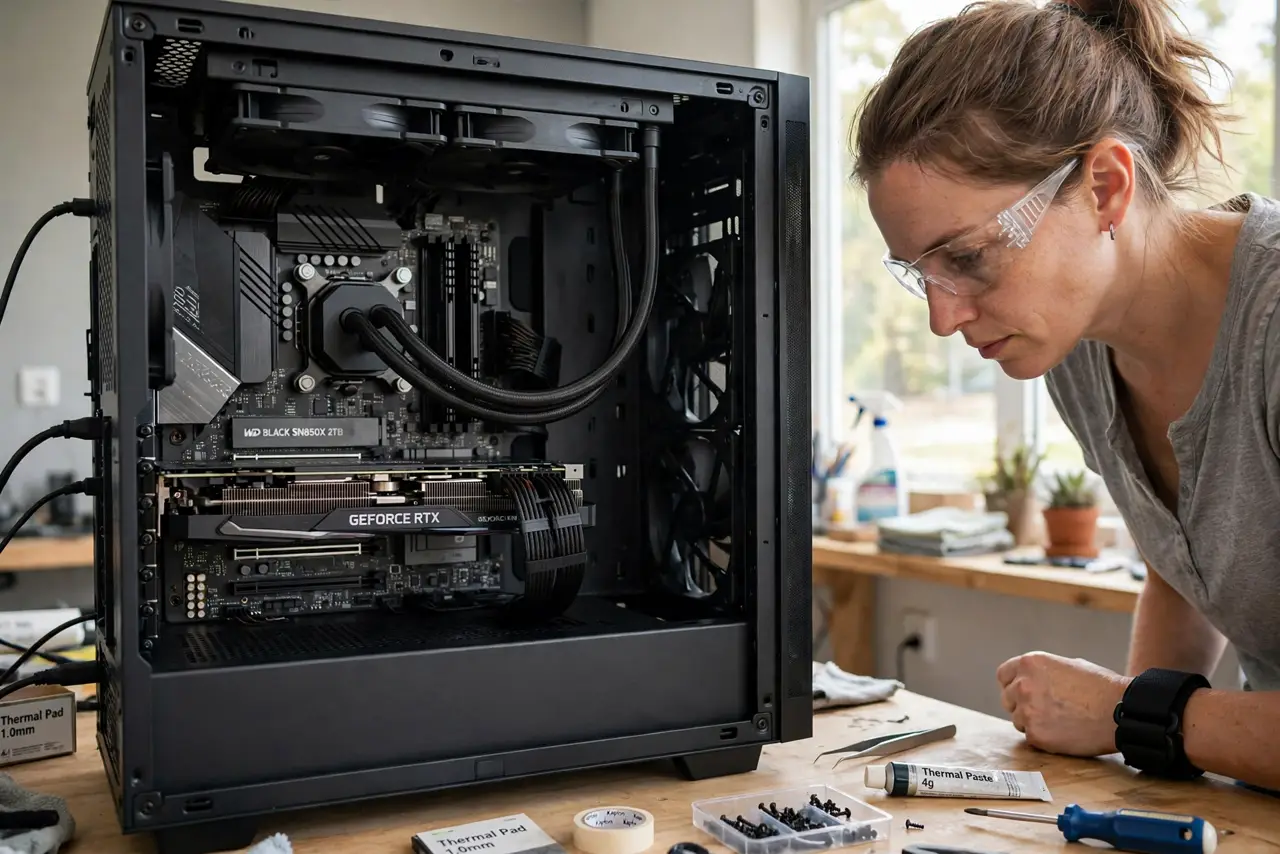
TL;DR / Quick Fix
Quick fix: mount an AIO radiator with tubes at the bottom or the radiator above the pump — never with the pump highest, which traps air and kills it. Front intake gives the coolest CPU temps; top exhaust keeps the case cooler. Tubes down beats tubes up.
Follow these steps
- Learn the one rule: pump never highest. Air rises to the top of the loop. If the pump sits above the radiator, it sucks air instead of coolant — noise, poor cooling, early death. The pump must not be the loop's high point.
- Best: radiator on top, tubes anywhere. Top-mounted radiator with the pump/block below is ideal — air collects harmlessly in the radiator's top tank, far from the pump.
- Good: front-mounted, tubes DOWN. Front intake with tubes at the bottom keeps air trapped at the top of the radiator, away from the pump. This is the classic correct front mount.
- Avoid: front-mounted, tubes UP. Tubes at the top let air drift toward the pump inlet over time. It works for a while, then gurgles — the most common AIO mistake.
- Intake vs exhaust: pick your priority. Front intake feeds the radiator cool outside air (best CPU temps, warmer case). Top exhaust uses warm case air (slightly warmer CPU, cooler everything else).
- Check temps after remounting. Run a stress test and watch coolant and CPU temps. A correct mount drops temps and silences the pump — if noise persists, the unit may need replacing, and fresh thermal paste is worth doing while you are in there.
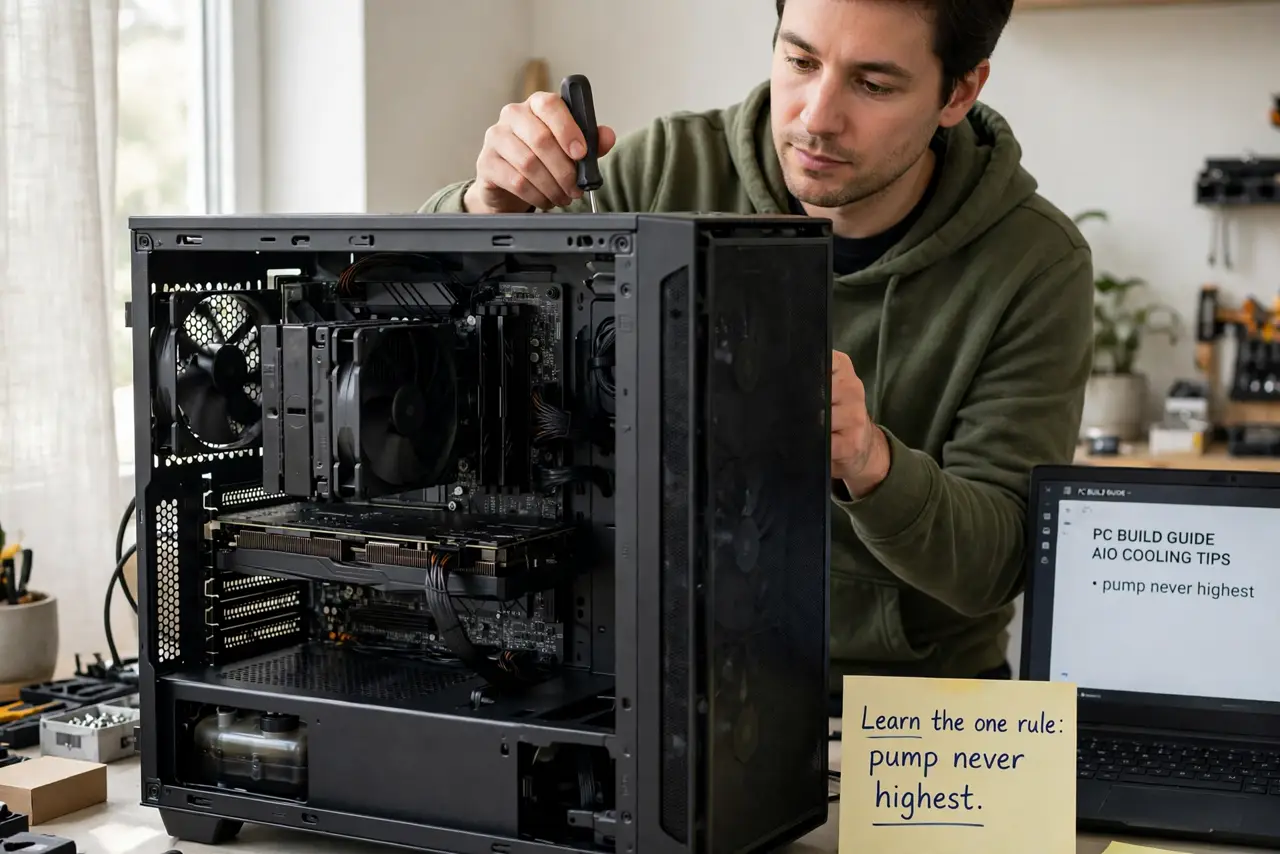
What NOT to do
- Do not mount the radiator below the pump. Bottom-mounted radiators put the pump at the top — the exact failure mode you are avoiding.
- Do not ignore gurgling. It is air in the pump, and running a pump dry shortens its life fast.
- Do not kink the tubes to make a mount 'fit'. Restricted flow is as bad as bad placement — reroute instead.
- Do not assume bigger radiator fixes bad placement. A 360mm radiator mounted wrong still traps air at the pump.
Frequently asked questions
Can the radiator go at the bottom of the case?
Only if the pump/block still is not the highest point — in most layouts it is, so bottom mounts are usually wrong.
How long do AIO coolers last?
Typically 5-7 years before permeation lowers coolant enough to matter. Gurgling that never stops can mean the end is near.
Is air cooling simpler?
Yes — no pump, no placement rules, no permeation. A good air tower rivals many AIOs with zero liquid risk.