Resin vs Filament?
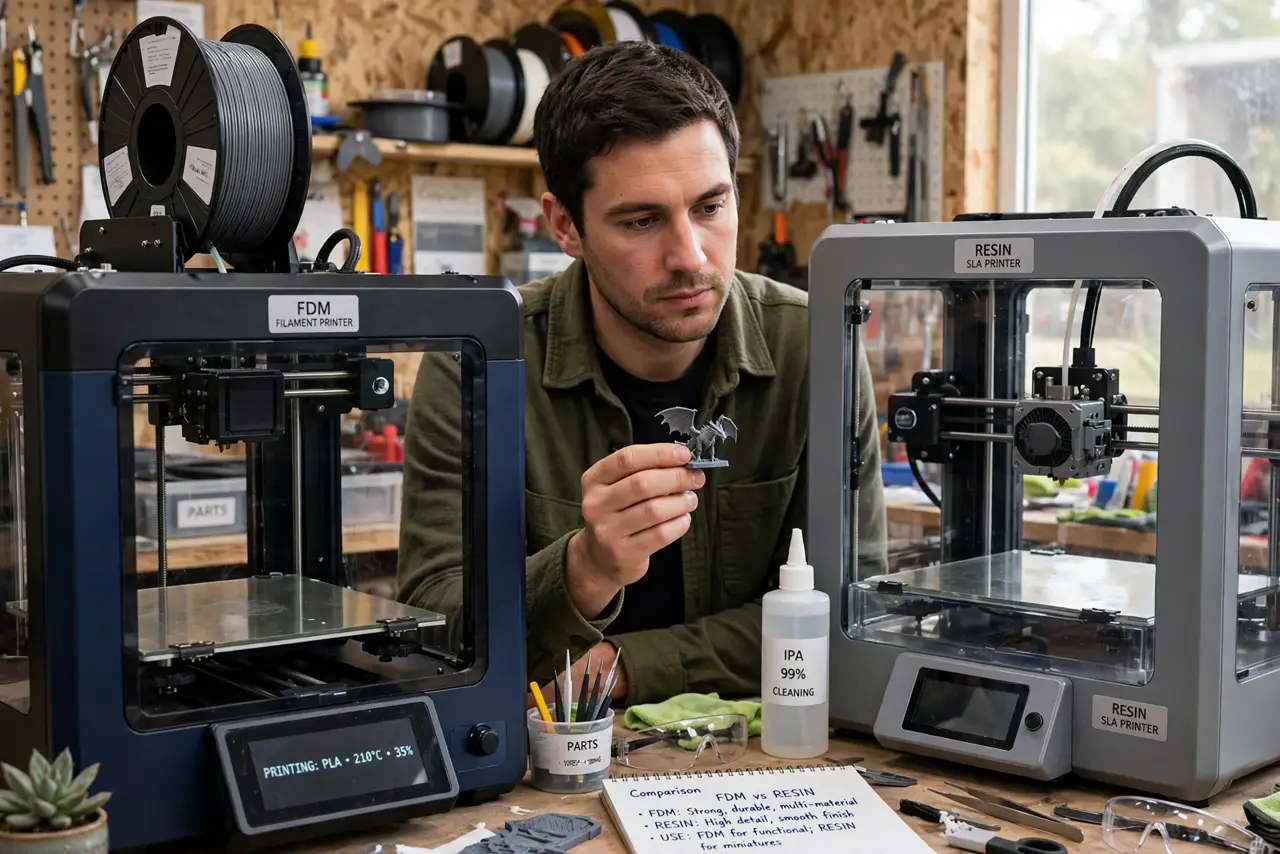
You have decided to get a 3D printer, and now the fork in the road: filament (FDM) or resin (SLA)? One melts plastic wire, the other cures liquid with light. One is forgiving and cheap to run; the other prints breathtaking detail but demands chemical safety discipline. The right choice depends entirely on what you want to make.
TL;DR / Quick Fix
Quick fix: filament (FDM) printers melt plastic — cheaper, safer, easier, best for beginners and functional parts. Resin (SLA) printers cure liquid with light — far finer detail, but messy chemicals, washing, curing, and ventilation required. Choose filament for learning and utility; resin for miniatures and jewelry-level detail.
Follow these steps
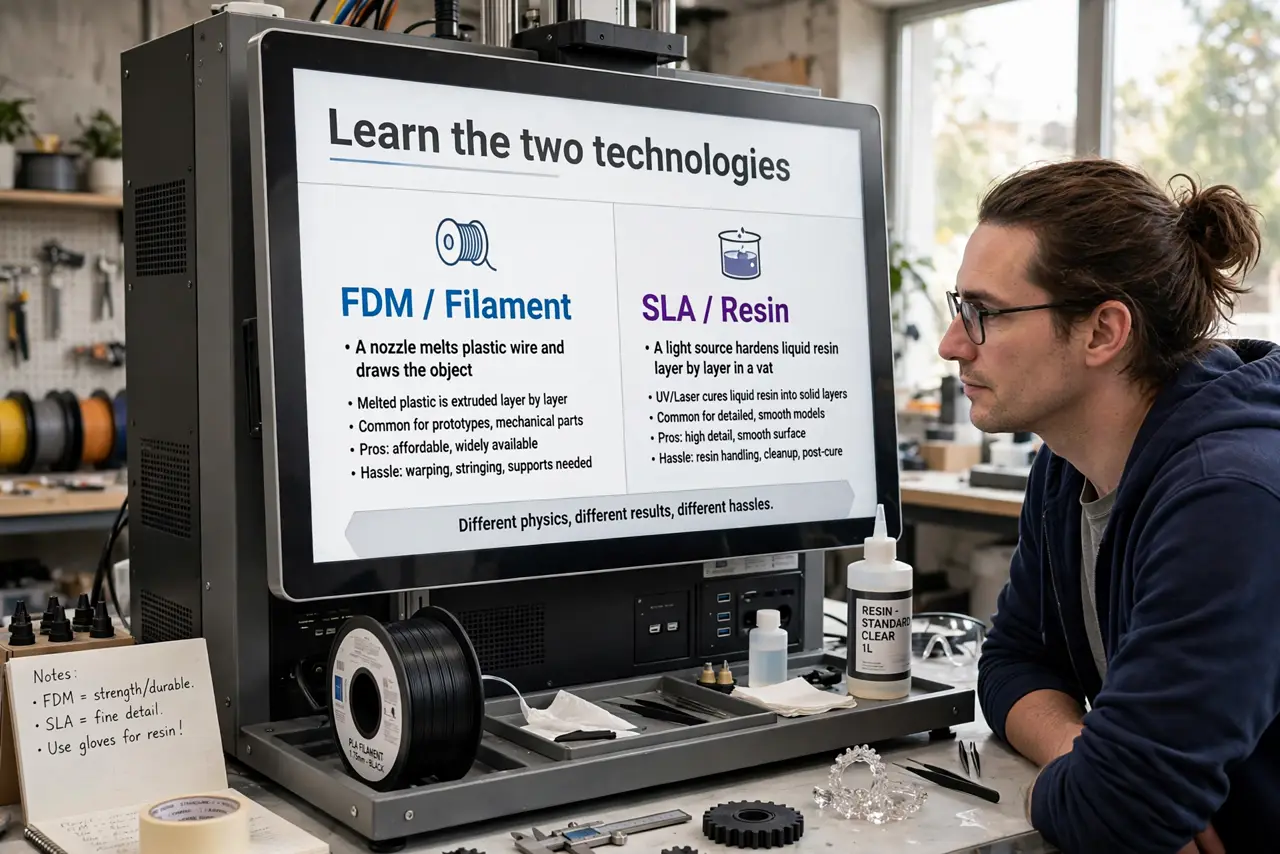
- Learn the two technologies. FDM/filament: a nozzle melts plastic wire and draws the object. SLA/resin: a light source hardens liquid resin layer by layer in a vat. Different physics, different results, different hassles.
- Compare the detail. Resin wins dramatically — layer lines nearly invisible, tiny features crisp. Filament shows visible layers. For tabletop miniatures or dental models, resin; for brackets and toys, filament is plenty.
- Compare the safety. Filament: ventilate, do not touch the hot nozzle. Resin: uncured resin is a skin irritant and toxic — gloves, ventilation, no-go near kids and pets. Resin demands respect filament does not.
- Compare the workflow. Filament: print, remove, done. Resin: print, wash in solvent, cure under UV, dispose of chemicals safely. Every resin print is a multi-step chemistry session.
- Compare the costs. Resin printers are cheap; resin itself and the wash/cure stations add up. Filament printers cost more upfront but the plastic is cheap. Total first-year cost often favors filament for casual use.
- Decide by what you will make. Functional parts, prototypes, household fixes, learning the hobby: filament. Miniatures, figurines, jewelry masters, ultra-detail: resin. Most beginners should start filament — see the basics and filament guide.
What NOT to do
- Do not start with resin as your first printer. The chemical handling, washing, and curing turn every print into a project — learn on filament first.
- Do not pour resin or wash solvent down the drain. It is hazardous waste — cure leftovers in sunlight and dispose of them as chemicals, per local rules.
- Do not handle uncured resin barehanded. Skin sensitization builds over time — gloves every time, no exceptions.
- Do not buy resin for stronger parts. Standard resin is brittle — engineering resins exist but cost more. Filament (PETG, nylon) beats basic resin for functional strength.
Frequently asked questions
Which is cheaper overall?
For casual printing, filament — cheap plastic, no consumables beyond the spool. Resin looks cheap until you add resin, gloves, wash solvent, and cure equipment.
Can one printer do both?
No — they are entirely different machines. Some people own both; nobody owns one machine that does both.
Is resin printing safe at home?
Yes with precautions: ventilated space, gloves, no kids/pets around the station, proper chemical disposal. Skip it if that sounds like too much — filament is the relaxed alternative.