One-Ring Calls? Don't Call Back
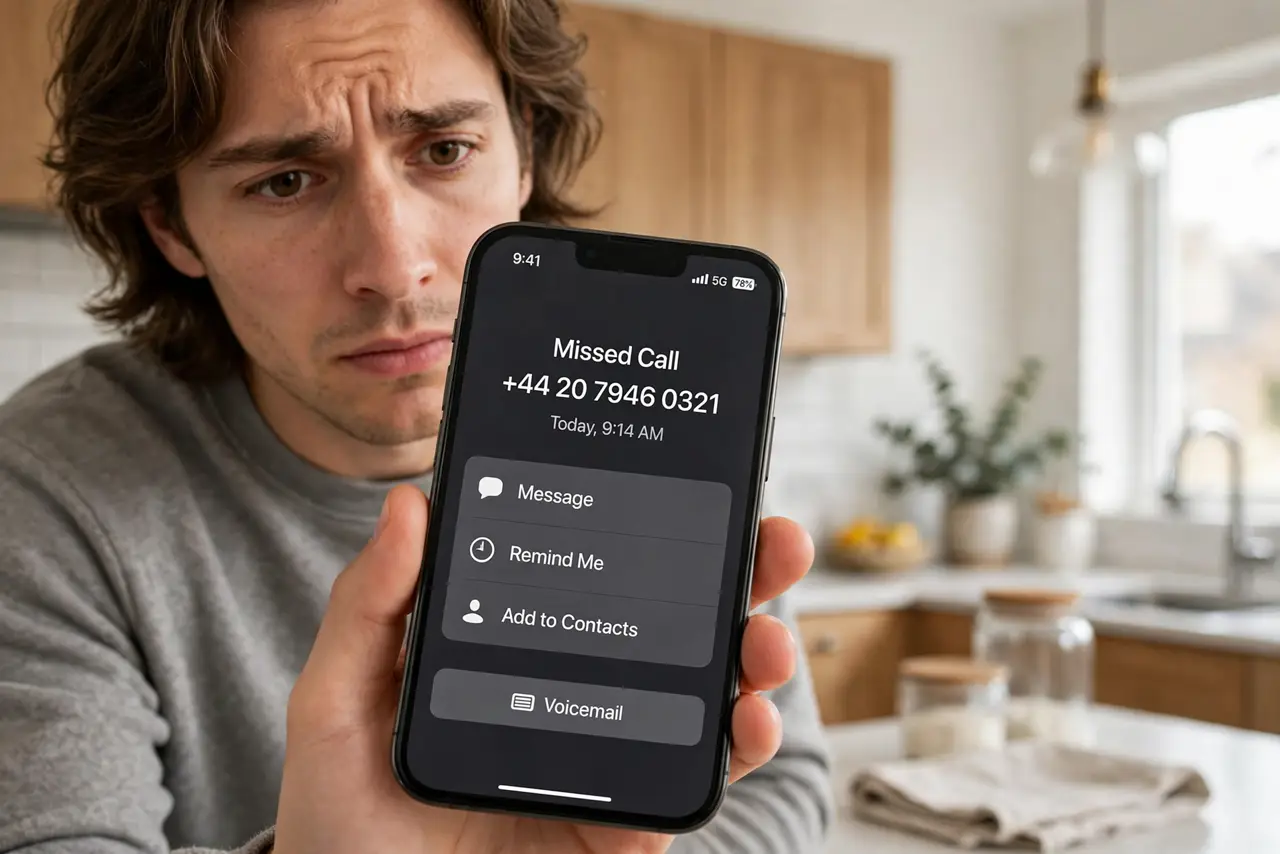
Your phone rings once — from an unfamiliar number, often international — and stops. Curiosity says call back. Do not. The one-ring (wangiri) scam wants exactly that callback, which connects you to a premium-rate number that bills by the minute.
TL;DR / Quick Fix
Quick fix: do not call back one-ring numbers, especially unfamiliar international ones. Block the number and delete the missed call. If curiosity already cost you a call, check your bill and dispute premium charges with your carrier. Legitimate callers leave voicemail; scammers count on your curiosity.
Follow these steps
- Recognize the pattern. One ring, then silence, from a number you do not know — often with a foreign country code. That is the entire setup; the callback is the payload.
- Do not call back. The number is premium-rate. Calling connects you to a recording designed to keep you on the line while the meter runs — sometimes steep rates per minute.
- Block and delete. Block the number on your phone and clear the missed call. One-ring operations rotate numbers constantly, so blocking is hygiene, not a cure.
- Check your bill if you called back. Look for premium or international charges you did not expect. Call your carrier promptly — many will reverse first-time scam charges.
- Warn the curious in your family. Older relatives return every missed call out of politeness. Tell them the rule: unknown number plus one ring equals ignore.
- Let voicemail be the filter. Real callers leave messages. No voicemail from an unknown international number is itself the answer — no callback needed.
What NOT to do
- Do not call back 'just to see who it was.' Curiosity is the product being sold — the call is the purchase.
- Do not stay on the line if you did call. Hang up immediately; every minute is billed.
- Do not assume your carrier blocks these automatically. Some do, many do not — your habit is the real filter.
- Do not confuse this with a dropped call from someone you know. Known contacts get a callback; unknown one-ring numbers do not.
Frequently asked questions
What is the one-ring scam?
Scammers ring once from premium-rate international numbers, hoping you call back. The callback connects to a pay-per-minute line — sometimes with a recording engineered to keep you holding.
How much can a callback cost?
Varies widely — from a few dollars to much more per minute, depending on the number. The charges appear on your phone bill as premium or international calls.
Will my carrier refund the charges?
Often, for a first incident, if you report promptly. Call and explain it was a one-ring scam callback — carriers know the pattern.