Track Sleep with Wearables
A wearable spits out sleep scores, stages, and readiness numbers every morning — and most people stare at them without knowing what to change. Sleep tracking is genuinely useful, but only if you read trends instead of obsessing over single nights. Here is how to wear one, what the numbers mean, and which habits actually move them.
TL;DR / Quick Fix
Quick fix: wear the tracker to bed every night and charge it during the day — consistency beats any single reading. Look at weekly trends in total sleep, bedtime regularity, and resting heart rate — not one bad night. Keep a regular wake time; no wearable fixes an irregular schedule.
Follow these steps
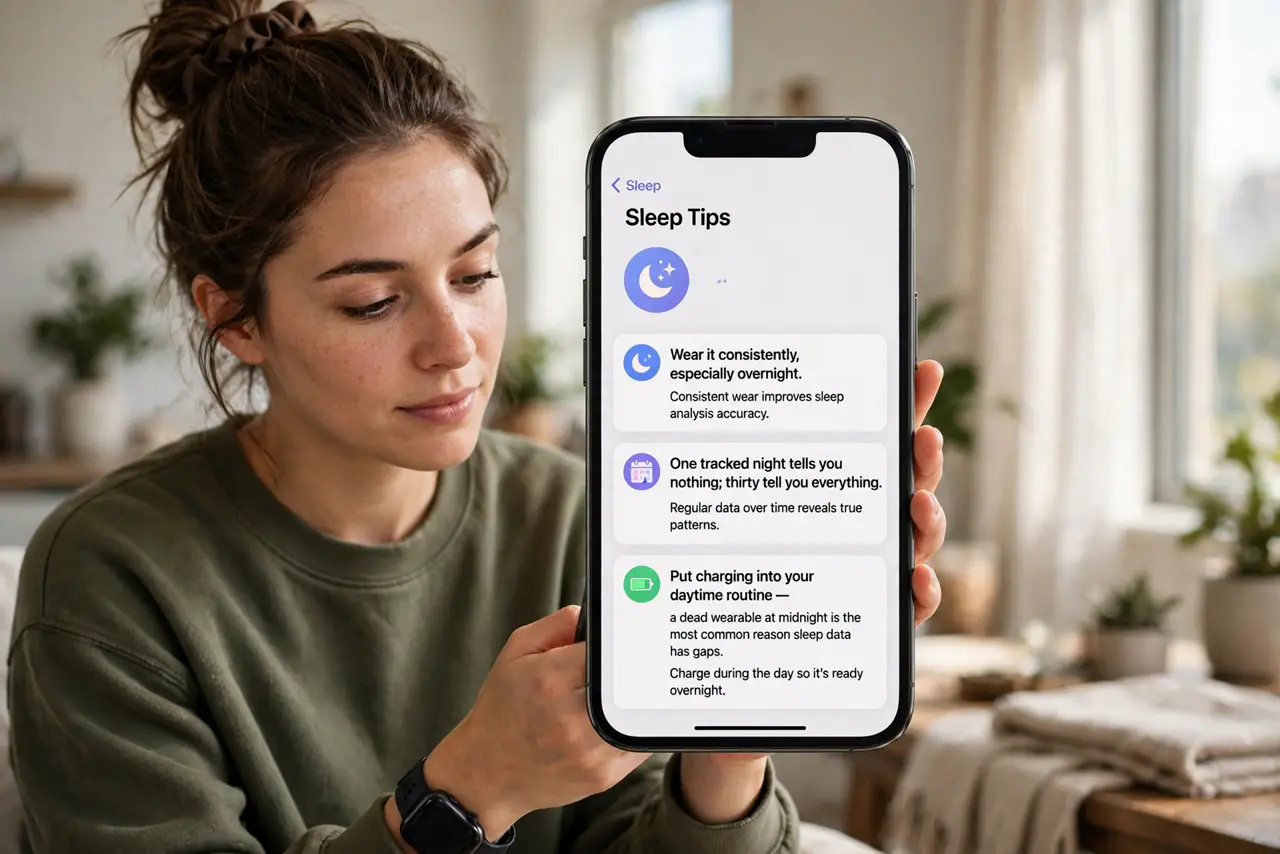
- Wear it consistently, especially overnight. One tracked night tells you nothing; thirty tell you everything. Put charging into your daytime routine — a dead wearable at midnight is the most common reason sleep data has gaps.
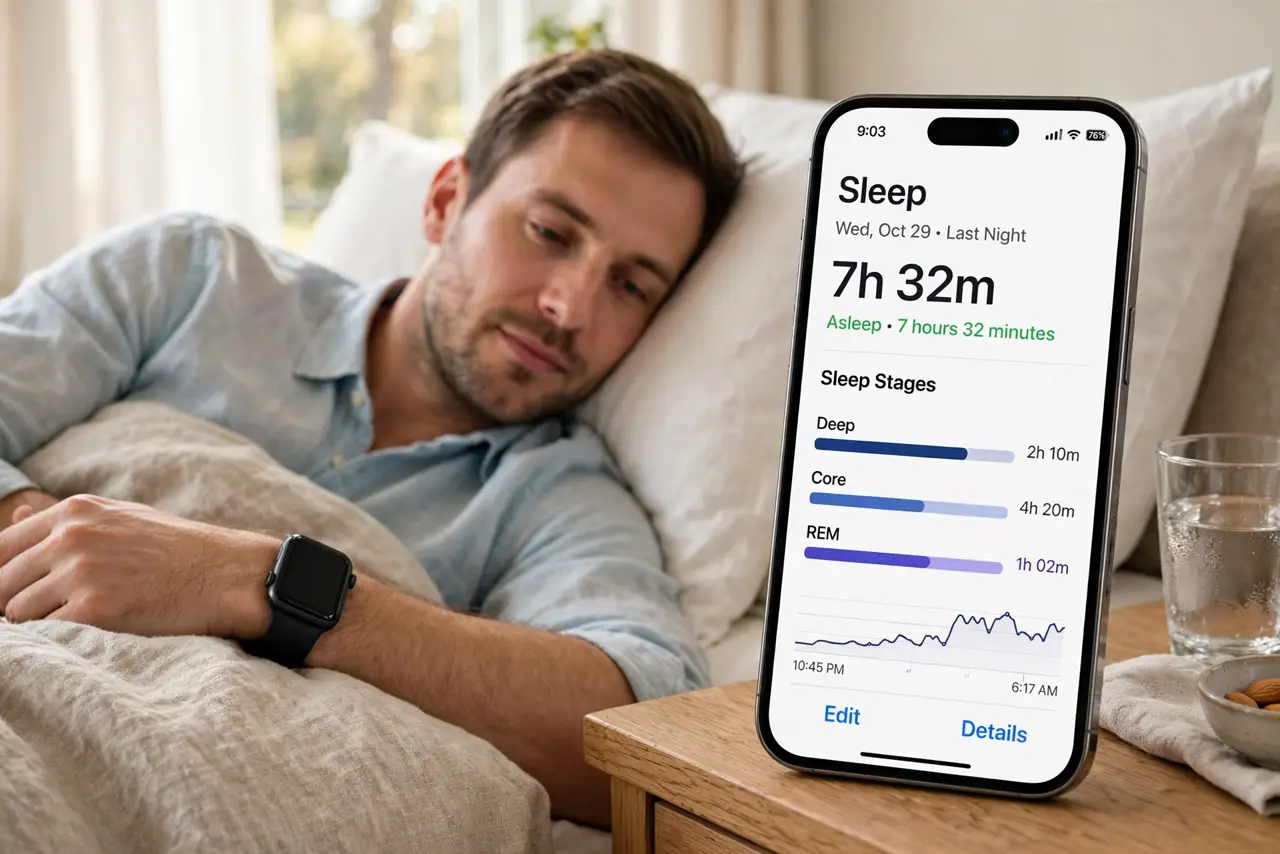
- Learn the three numbers that matter. Total sleep time, bedtime consistency, and resting heart rate trend. Everything else — scores, stages, readiness — is derived from these. If those three are stable, you are doing fine.
- Compare weeks, not nights. A single bad night after coffee or stress means nothing. Look at 7-day averages: that is where real patterns — like late weekends wrecking your week — become visible.
- Fix the schedule before the gadgets. No wearable fixes an irregular bedtime. Pick a wake time you can keep seven days a week and let bedtime follow — regularity beats duration for how rested you feel.
- Use heart-rate trends as an early signal. A resting heart rate creeping up over a week often precedes illness or overtraining. That is the wearable earning its keep — see heart-rate accuracy notes so you read it right.
- Pair it with the basics, not instead of them. Dark cool room, no screens before bed, no late caffeine — the tracker measures whether these work for you. A smart ring tracks the same things more comfortably overnight if watches bother you.
What NOT to do
- Do not panic over one bad sleep score. Single nights are noise — alcohol, stress, and a hot room all tank one reading without meaning anything.
- Do not treat sleep stages as medical data. Consumer wearables estimate stages from movement and heart rate; they are directionally useful, not clinically precise.
- Do not charge it overnight. That is when the valuable data happens — charge while you shower or work instead.
- Do not chase a perfect score. A consistent 7 hours beats a heroic 9 once a week; the tracker rewards routine, not records.
Frequently asked questions
Which wearable tracks sleep best?
Rings and watches with good heart-rate sensors all do well at trends. Comfort matters most — the best tracker is the one you actually wear every night.
Why does my tracker say I slept badly when I feel fine?
It weighs restlessness and heart rate heavily. How you feel in the morning is still a valid signal — use the tracker as a second opinion, not a verdict.
Do I need a subscription for sleep data?
Many platforms lock advanced insights behind one. Check before buying — basic sleep duration is usually free, detailed analysis often is not.