Power Strip vs Surge Protector?
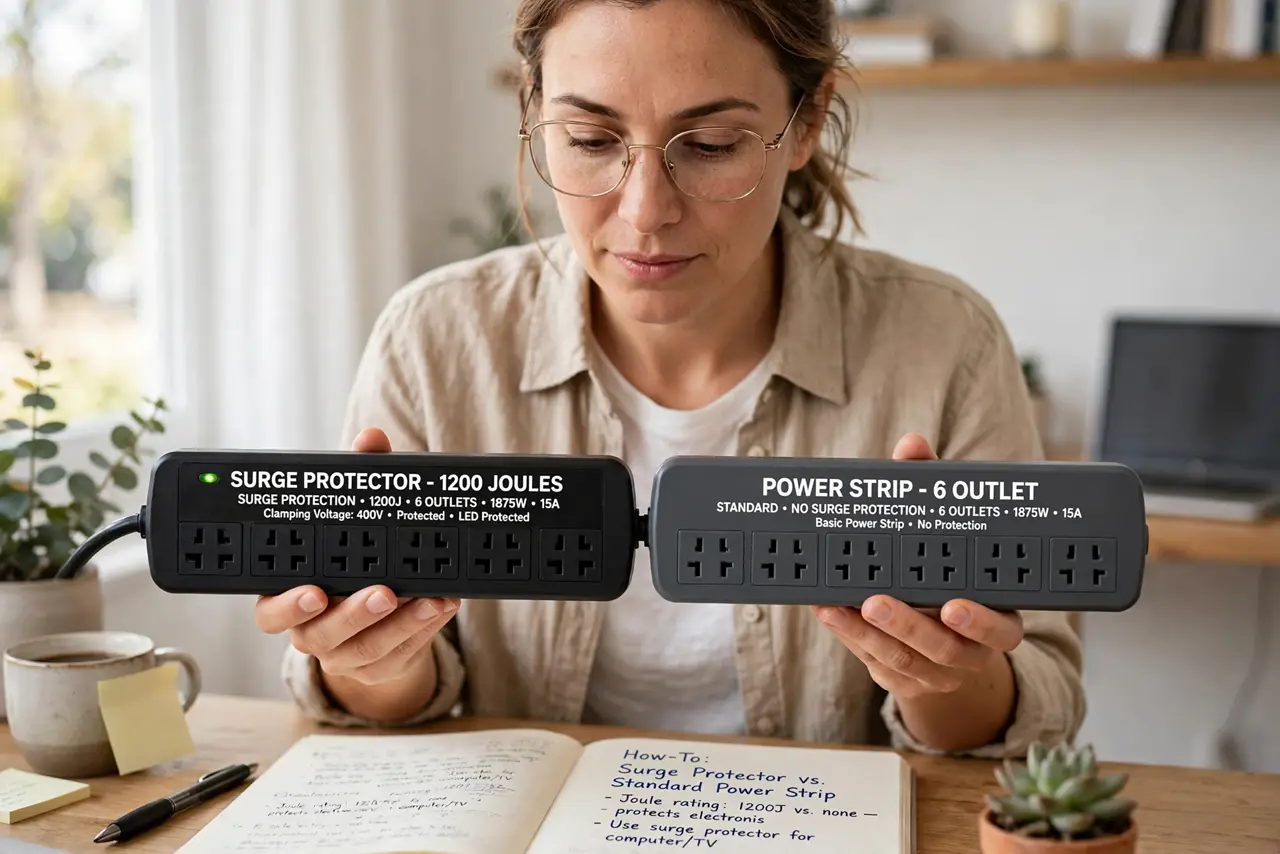
They look identical — a row of outlets on a cord — but only one of them protects your gear from power spikes. A power strip just adds outlets; a surge protector adds outlets plus spike-absorbing circuitry. Plugging a $2,000 PC into a $10 strip is a gamble most people do not know they are taking.
TL;DR / Quick Fix
Quick fix: check for a joule rating on the label — surge protectors list one (1,000+ joules is decent), plain strips do not. If your expensive electronics plug into a strip with no joule rating, replace it with a real surge protector. For full-house defense, consider whole-home protection.
Follow these steps
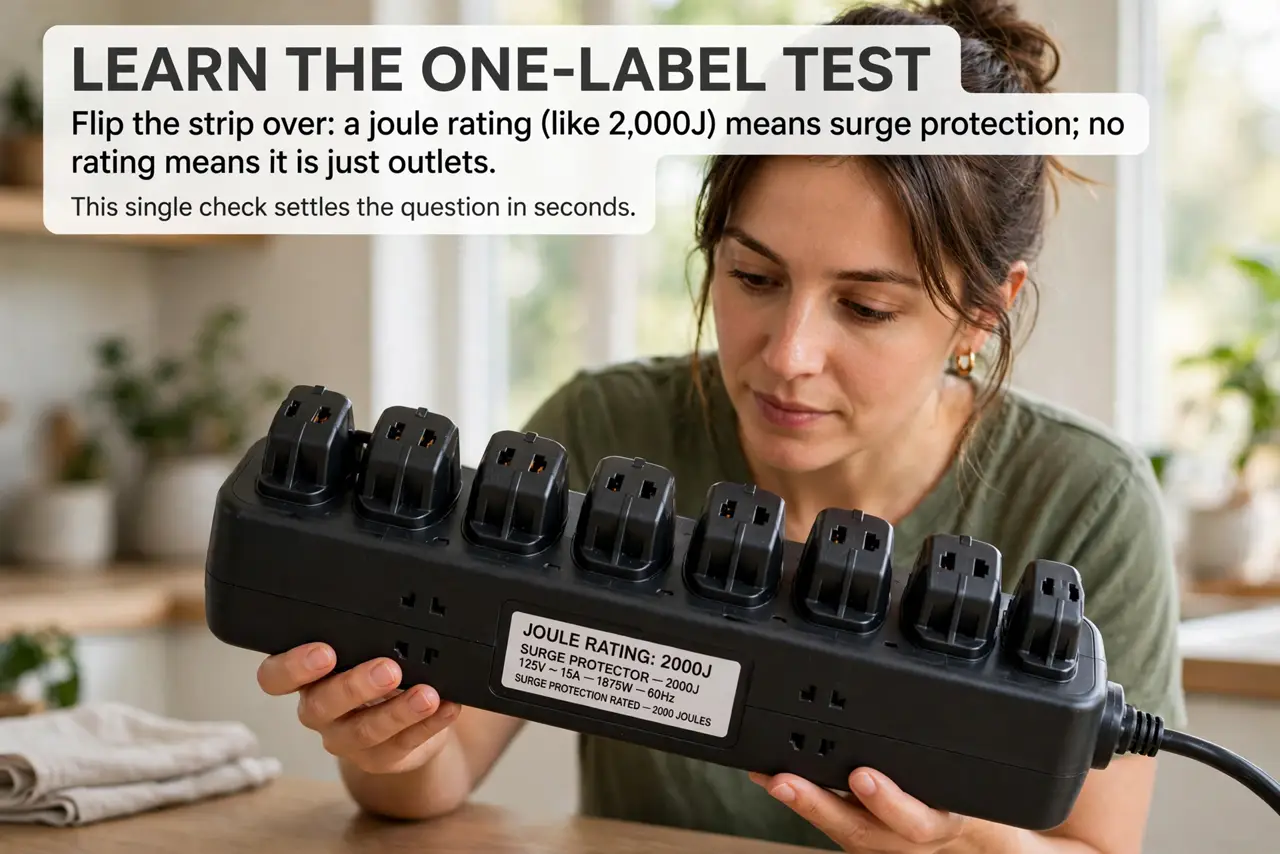
- Learn the one-label test. Flip the strip over: a joule rating (like 2,000J) means surge protection; no rating means it is just outlets. This single check settles the question in seconds.
- Understand what surges actually are. Voltage spikes come from lightning, grid switching, and big appliances cycling. They are brief but can fry power supplies and motherboards instantly — the protector absorbs the spike so your gear does not.
- Size the joules to the gear. Basic electronics: 600-1,000 joules. Home theater or office PCs: 2,000+. The rating is a lifetime budget — bigger numbers last through more spikes before wearing out.
- Check for an indicator light. Good protectors have a 'protected' light. When it goes out, the absorbing components are spent — the strip still passes power but no longer protects, and most people never notice.
- Replace protectors after big events. A nearby lightning strike can exhaust a protector in one hit. If the protected light is out after a storm, replace the unit — it did its job once.
- Know the limits. No plug-in protector stops a direct lightning strike. For serious storm regions, layer plug-in protectors with whole-home surge protection at the breaker panel.
What NOT to do
- Do not assume all strips protect. Most cheap strips are outlet multipliers with zero protection — the joule rating is the only proof.
- Do not daisy-chain surge protectors. Plugging strips into strips overloads circuits and can defeat the protection — one protector per wall outlet.
- Do not keep a protector with a dead indicator light. A dark 'protected' light means it is now just an expensive power strip — replace it.
- Do not protect only the PC. Routers, TVs, and consoles die from the same spikes — protect the whole entertainment and office setup.
Frequently asked questions
How long does a surge protector last?
Until its joule budget is spent — years in calm areas, one storm in bad ones. The indicator light is the honest answer; check it yearly.
Are expensive surge protectors worth it?
Up to a point: higher joules and better clamping voltage genuinely protect more. Beyond that you are paying for brand and extra outlets.
What's the difference between the two, precisely?
The detailed comparison breaks down circuitry, ratings, and price — same conclusion, more depth.