Free VPN Risks
Free VPNs promise privacy for zero dollars, and the price is hidden in the fine print: your data. Running VPN servers costs real money, so free providers earn it somehow — ads, data sales, or bandwidth limits that nudge you to pay. Some are honest tools; many are data harvesters wearing a privacy costume.
TL;DR / Quick Fix
Quick fix: treat free VPNs with suspicion — running servers costs money, so free providers monetize you somehow. Check the logging policy and company behind any free VPN first. Never bank through an unvetted free VPN. The safest free options are limited tiers from paid providers.
Follow these steps
- Understand the business model. Servers and bandwidth cost money every month. If you are not paying, ask how they survive — the honest free options explain which models are legitimate.
- Read the logging policy. A VPN that logs everything you do is worse than no VPN. Look for an audited no-logs policy — see VPN logs explained for what to check.
- Research the company behind it. Unknown owners in secrecy jurisdictions are a red flag. Reputable providers put real names, addresses, and audits on their site.
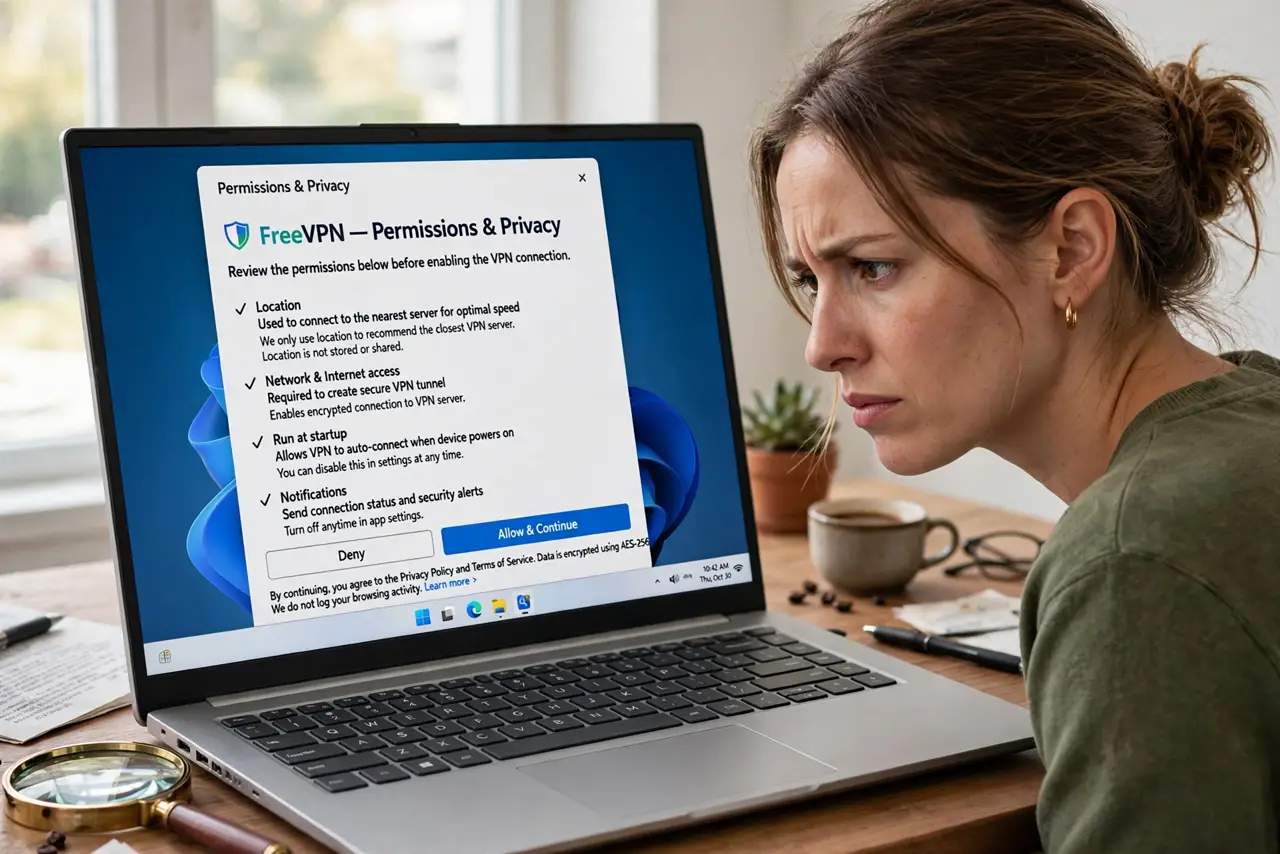
- Check app permissions. A VPN app asking for contacts or location is harvesting. It needs network permission and nothing else — deny the rest.
- Prefer freemium from paid providers. The safest free VPNs are limited tiers of paid services: same infrastructure, capped data. Their incentive is upselling you, not selling you.
- Know the basics first. Understand what a VPN actually protects before trusting a free one with everything. The basics guide explains it plainly — knowledge is the real free privacy tool.

What NOT to do
- Do not do heavy downloading over a shady free VPN. Some log and forward complaints — or worse, inject ads into your traffic.
- Do not assume free means private. Several free VPNs have been caught selling browsing data — the product is you.
- Do not use a free VPN for banking. An untrusted middleman sees your traffic patterns; use mobile data or a vetted provider instead.
- Do not ignore the speed caps. Free tiers throttle hard — if it is unusably slow, that is the business model talking.
Frequently asked questions
Are any free VPNs trustworthy?
A few — mainly limited free tiers from reputable paid providers. Random free-only apps with no business model are the risky ones.
Why is my free VPN so slow?
Throttling pushes you toward paid. It is deliberate, not a technical limitation.
Can a free VPN steal my passwords?
It sees your traffic metadata and unencrypted content. HTTPS protects logins, but a malicious VPN is still a terrible middleman.