OLED vs QLED?
Two TVs, two acronyms, one confusing letter apart: OLED and QLED. Salespeople praise both, prices overlap, and the names suggest they are siblings — they are not. One is a fundamentally different display technology with perfect blacks; the other is an enhanced LCD. The right choice depends on your room, your viewing, and what you watch.
TL;DR / Quick Fix
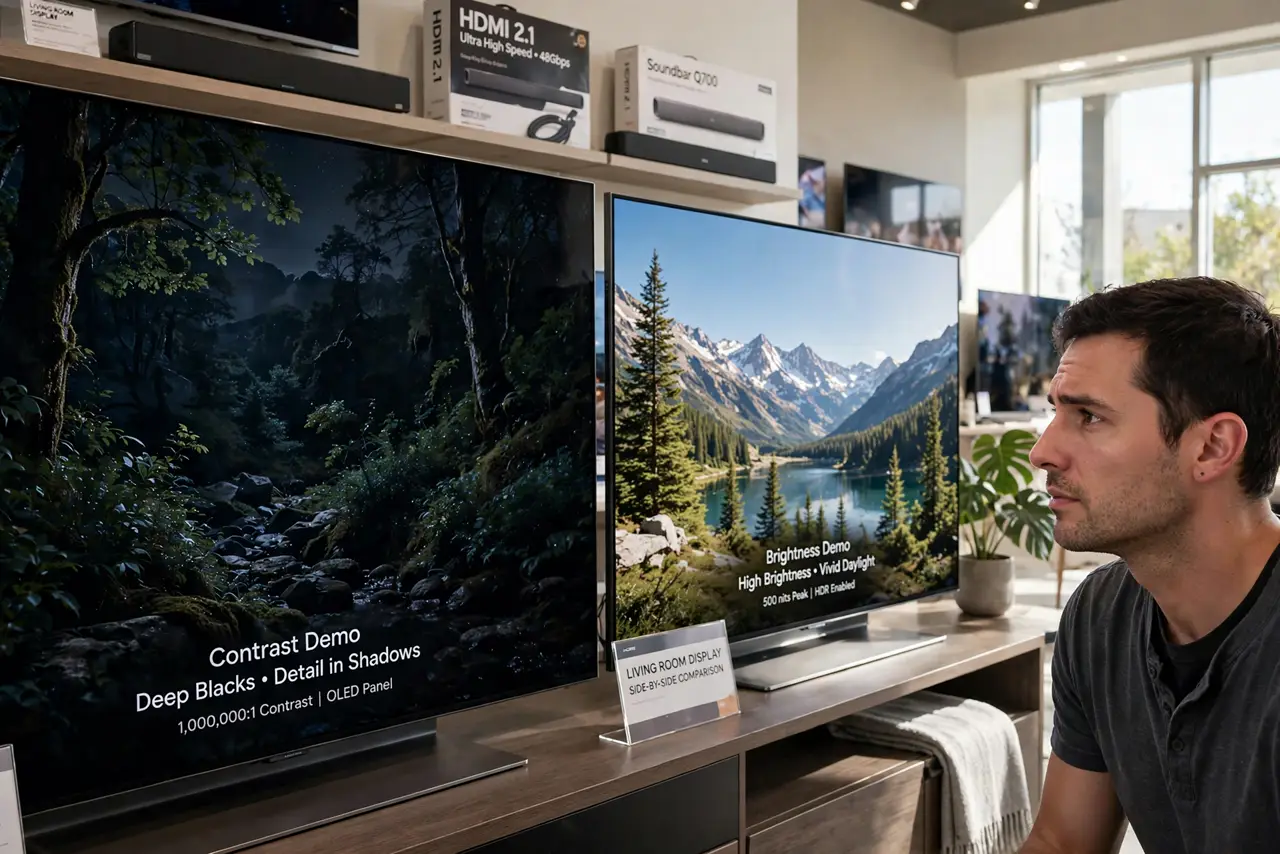
Quick fix: choose OLED for dark-room movie watching — perfect blacks and infinite contrast, with some burn-in caution for static content. Choose QLED for bright rooms — much brighter, no burn-in risk ever, slightly less perfect blacks. Room lighting decides more than specs do.
Follow these steps
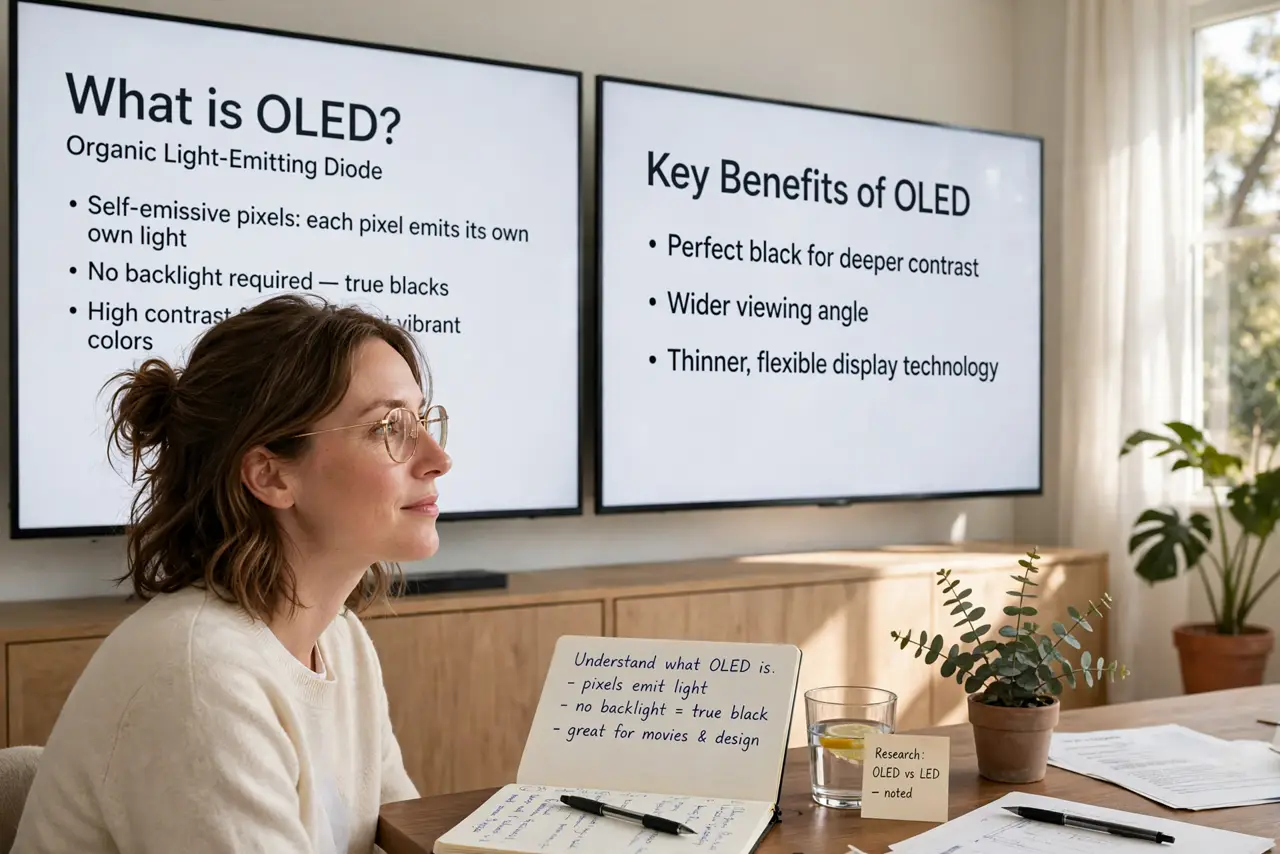
- Understand what OLED is. Each OLED pixel makes its own light and turns fully off for black — true, perfect blacks and instant response. The tradeoff is burn-in risk with static images over long hours.
- Understand what QLED is. QLED is an LCD with a quantum-dot color layer — brighter, more affordable, immune to burn-in. Blacks are very good but never pixel-perfect like OLED.
- Judge by your room. Dark dedicated viewing room: OLED's blacks are unmatched. Bright living room with big windows: QLED's brightness wins — OLED looks dim next to sunlight.
- Consider what you watch. Movies and prestige TV in the evening: OLED shines. News, sports, and kids' channels with static logos all day: QLED's immunity to burn-in is the safer pick.
- Compare the middle ground. High-end QLEDs with mini-LED backlights narrow the gap considerably — near-OLED blacks without OLED's risks, at a middle price.
- Set a budget anchor. At the same size, OLED usually costs more than QLED. Decide whether the black-level advantage is worth the premium for your room — often it is not.
What NOT to do
- Do not buy OLED for a sun-drenched room. Brightness matters more than blacks when fighting daylight — QLED wins there.
- Do not buy QLED expecting OLED blacks. Very good is not perfect — in a dark room the difference is visible.
- Do not run a news channel all day on OLED. Static tickers and logos for thousands of hours are the burn-in recipe.
- Do not choose by showroom torch mode. Stores crank brightness to maximum — judge in a mode closer to home viewing.
Frequently asked questions
Which lasts longer?
Both last many years in normal use. OLED's organic pixels age with use; QLED's backlight dims over time — neither is a short-lived purchase.
Is QLED just a marketing name?
Partly — it is still LCD technology underneath. But quantum dots genuinely improve color, so it is marketing around a real enhancement.
What about gaming?
Both are excellent now — low input lag and high refresh rates are standard. OLED's instant response is slightly better; QLED's brightness suits daytime play.