Why Does NAT Exist?
Every device in your home — phones, laptops, TVs, consoles — reaches the internet through a single public address, yet nothing collides. That quiet miracle is NAT: network address translation, the system that lets a whole household share one address. It was born from a shortage nobody planned for, and understanding it explains half of all home networking mysteries.
TL;DR / Quick Fix
Quick fix: NAT lets all your home devices share your provider's single public IP — your router translates between private home addresses and the public one. It exists because IPv4 addresses ran out. It also explains strict NAT in games and why port forwarding is sometimes needed.
Follow these steps
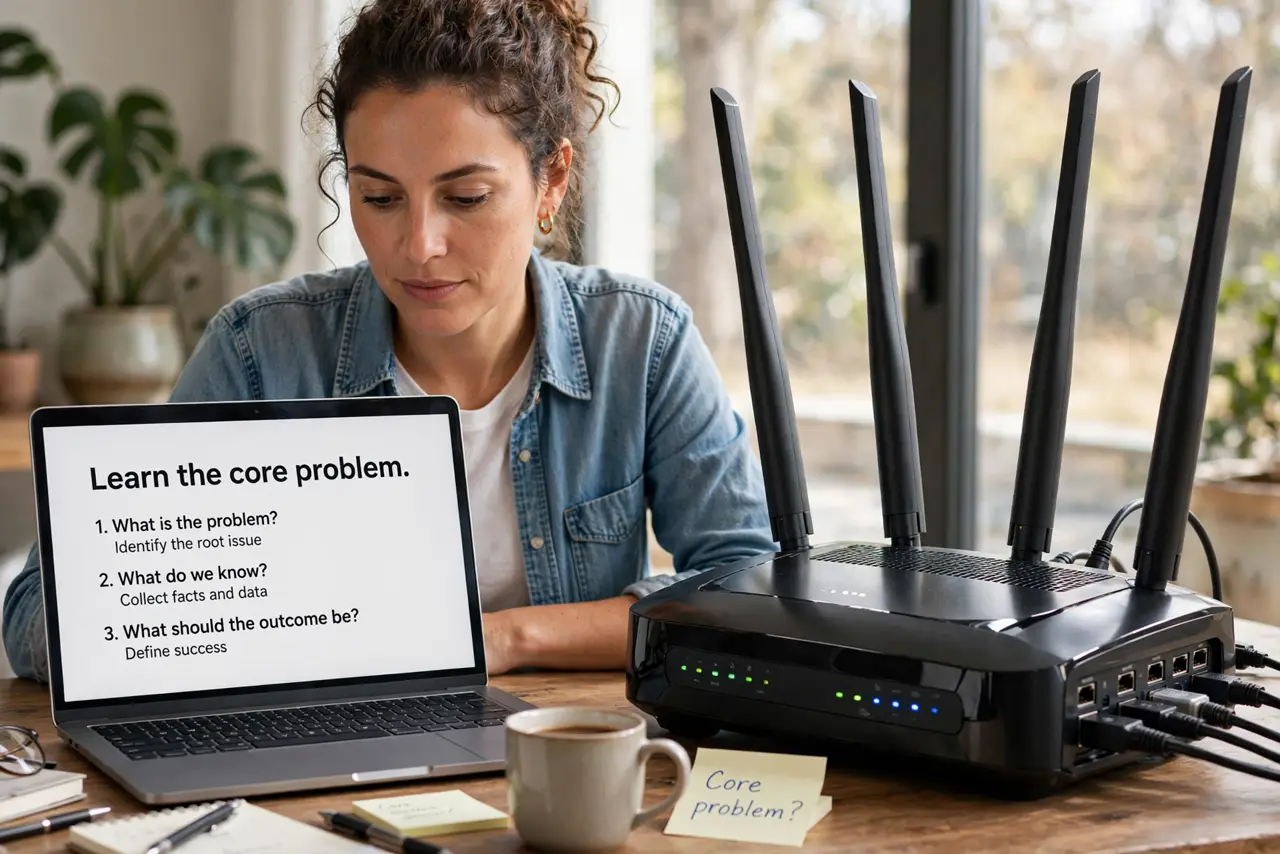
- Learn the core problem. IPv4 has about four billion addresses — not enough for every device on earth. Your provider gives your home just one public address, and NAT makes that one address serve every device you own.
- See how the router translates. Your router assigns each home device a private address and keeps a translation table: when your phone requests a web page, the router sends it out under the public address and routes the reply back to the phone.
- Understand why it is invisible. Outbound connections — browsing, streaming, downloads — work transparently through NAT. You never notice it until something needs inbound connections, like hosting a game server.
- Learn why games complain about it. Peer-to-peer games need other players to reach you inbound, which NAT blocks by default. That is the entire story behind strict NAT and the port-forwarding dance.
- Meet its bigger cousin: CGNAT. Some providers run out of public addresses too, so they put many homes behind one address — carrier-grade NAT. It breaks port forwarding from your side entirely; see the CGNAT basics.
- Know what IPv6 changes. IPv6 has effectively unlimited addresses, making NAT unnecessary — every device could have its own public address. Adoption is gradual, so NAT remains the reality for most homes today.
What NOT to do
- Do not think of NAT as a firewall. It blocks unsolicited inbound traffic as a side effect, but it is not security — keep your actual firewall on.
- Do not disable NAT on your router. Some routers offer bridge or passthrough modes — disabling NAT without understanding the topology breaks the home network.
- Do not blame NAT for slow speeds. NAT adds negligible delay; slowdowns come from the connection itself, not the translation.
- Do not assume one public IP means one device. The whole point is sharing — dozens of devices, one address, zero conflicts.
Frequently asked questions
Is NAT why I can't host a server easily?
Exactly — inbound connections need explicit permission through port forwarding. NAT's default-deny for inbound is the hurdle.
Does NAT protect me from hackers?
Partially and incidentally — unsolicited inbound scans hit the router, not your devices. But malware that phones home bypasses it, so it is not real security.
Will IPv6 kill NAT?
Eventually, where fully deployed. Until then, NAT remains the standard home setup worldwide.